Author: Ma_1981

  • Toritake, Shibuya: The Only Yakitori Shop You Need in Tokyo

    Toritake, Shibuya: The Only Yakitori Shop You Need in Tokyo

    Shibuya has a thousand places to eat and most of them want your attention. This one has been quietly filling three floors since 1963. Eat here once and you can skip every other yakitori shop in Tokyo — and that is not really a claim about the chicken.

    The call

    Toritake, on Dogenzaka, right beside Shibuya Mark City. Charcoal yakitori, open from noon, every day of the year. In this writer’s Tokyo top three for yakitori — and the other two are not places you can walk into at 1pm without a reservation.

    Go here once and you do not need to go to another yakitori shop. Not because there are no better skewers somewhere in this city; there are always better skewers somewhere in this city. Because everything a Japanese drinking house is happens to be present in this one building, at the same time, on a Tuesday afternoon.

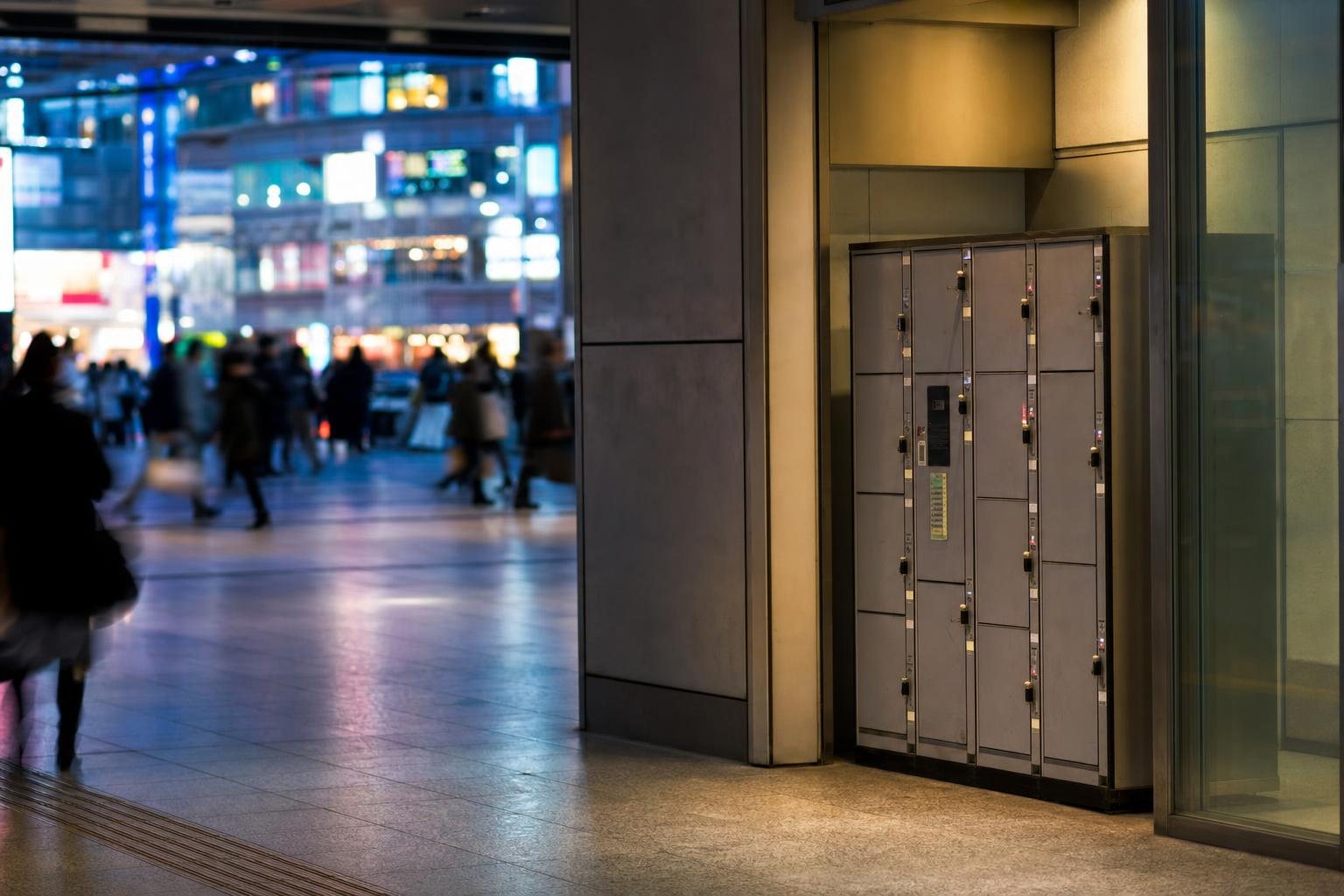
    Order skewers, one of the vegetable ones, and a large bottle of lager. Budget ¥2,000–3,000 a head. If you have put a bag in a Mark City locker and have two hours, this is the answer to what you do with them.

    The tier of restaurant nobody explains to you

    English-language guides give you two kinds of yakitori. The izakaya chain, where it is cheap and fine. Or the counter with eight seats where a chef serves you fifteen courses of chicken for ¥20,000 and you should probably book two months out.

    There is a third tier, and it is where Japanese people actually eat. The taishu yakitori shop — the popular one, the neighbourhood institution. Decades old, three floors, loud, no dress code, no ceremony, and the grilling is as good as the expensive place because the person doing it has been doing it for thirty years.

    Toritake is the Shibuya example. It is not a hidden gem — it is on Tabelog’s Top 100 Yakitori list and has over 2,000 reviews. It is simply invisible to visitors, because it looks like an old building on a busy hill and nobody has told you to go in.
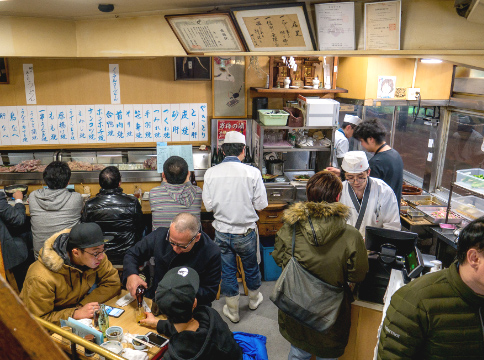
    The interior of Toritake, customers seated at closely packed tables with staff in white working between them
    A weekday inside. Three floors of this is the atmosphere, not a flaw in it.

    The skewers

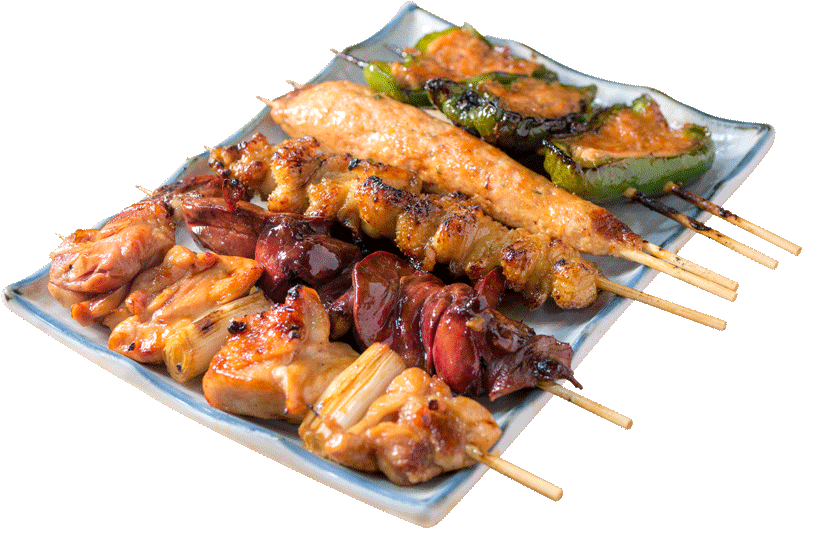
    The house thing is the ōgushi — the big skewer. Not a marketing word. Here is what it actually means:

    Toritake grills its chicken on eel skewers. Eel skewers are longer and heavier than yakitori skewers, because eel is heavier than chicken. So the portions are sized to the skewer, and the skewer was built for something else. That is why the food arrives looking faintly absurd.
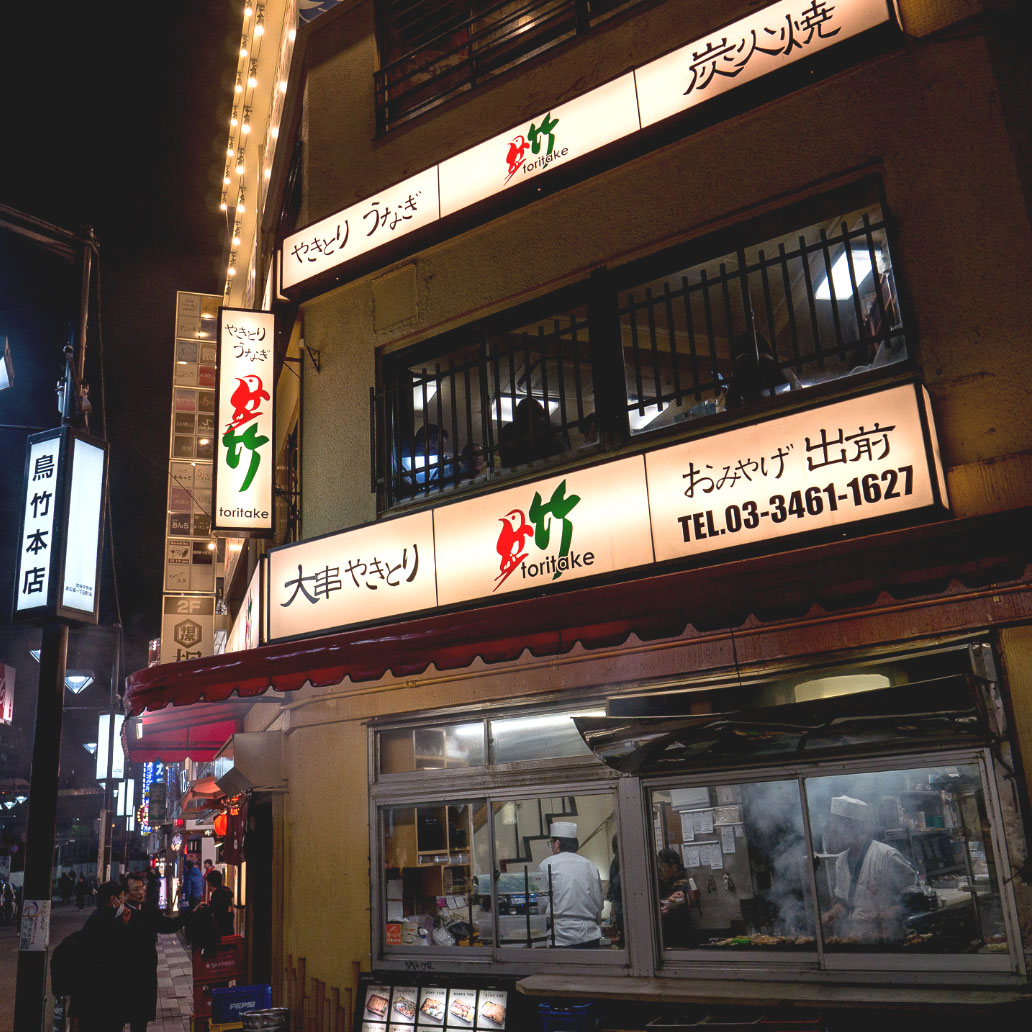
    A plate of Toritake’s ogushi big skewers — chicken, offal and vegetables grilled over charcoal on long eel skewers
    The ōgushi. Chicken portioned to fit an eel skewer, which is why it looks like this.

    They can do that because they are also an eel restaurant, which is the next thing.

    The tare — the sweet soy glaze — has been topped up rather than replaced since 1963. Sixty-three years of the same pot. You can have salt instead, and for the plain chicken you should try one of each.
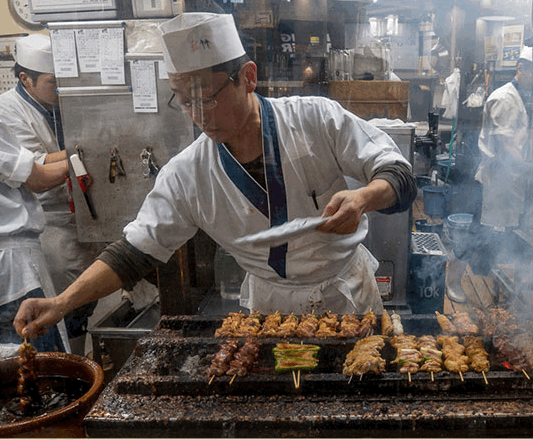
    A cook at Toritake turning rows of skewers over a long charcoal grill behind the counter
    The grill. The tare in the pot has been topped up, not replaced, since 1963.

    Then get a vegetable skewer. Grilled vegetables at a yakitori shop are usually an afterthought; here they are chosen for size and texture and they come off the charcoal properly. Ask for whatever is on the counter.

    They butcher eel in the building

    Toritake is a yakitori shop and an unagi shop. Whole chickens and live eel, broken down in-house, skewered by hand, grilled over charcoal.

    This matters for two reasons. One, the eel is priced jika — market rate, ask on the day — which is normal for eel in Japan and alarming if you have not seen it before. Two, eel in Tokyo is usually a formal, expensive, slightly intimidating meal in a quiet room. Here you can eat properly grilled kabayaki in a noisy three-floor drinking house at two in the afternoon. There is nowhere else in Shibuya doing that.

    The part that does not add up

    Dogenzaka is one of the most expensive slopes of ground in Tokyo. Toritake holds 128 seats across three floors of it, from basement to second floor, and sells skewers for around ¥333–383 each.

    It opens at noon and closes at 23:00, 365 days a year apart from four days at New Year. No closing day. Most Tokyo yakitori shops open at five in the afternoon and shut on Sundays; this one is grilling while you are still deciding what to do with your morning.

    Sixty-three years in the same spot, in the neighbourhood that demolishes and rebuilds itself faster than anywhere in Japan. Shibuya station has been under construction for most of the last fifteen years. Toritake has not moved.

    The drinks, which are not an afterthought

    Order the large bottle of Sapporo Lager — the one Japanese drinkers call Akaboshi, “red star”, after the label. It is not the beer they advertise, it is the beer old drinking places keep, and asking for it by name is a small tell that you know where you are.

    There is also a house dai-nama — a draft in a genuinely silly-sized mug — plus shochu, sours, and a proper sake list. This is a drinking house that happens to grill extremely well, and the drink list is built accordingly.

    The dishes to order that are not skewers

    • Nikomi — slow-simmered offal in broth. The permanent bestseller. Order it even if that sentence did not sell it to you
    • Nikogori — the shop’s chicken stock, set into a savoury jelly and served cold. A yakitori shop’s party trick, and almost never on menus abroad
    • Hiyashi tomato — a chilled tomato, cut into wedges. Yes, that is the whole dish. It is on every good drinking-house menu in Japan and it is genuinely what you want next to charcoal and salt
    • Yakitori-don — skewered chicken over rice with the sixty-three-year tare poured on. The lunch order, and the one to get if you only have thirty minutes

    Ordering it without Japanese

    Easier than the building suggests. Reservations are only taken for parties of five or more, which means that as a couple or a pair you simply walk in — no booking, no app, no problem. It also means you may wait at peak times. Come at 12:00, or after 20:30.

    The staff are used to a Shibuya crowd and are, unusually for a shop this old, actively friendly. Point at the counter, hold up fingers, say tare or shio. Nobody minds.

    Two things worth knowing: they take cards as well as cash, which is not a given in this category of shop. And the entrance is at street level — if you come up from the underground passages, use exit 2 or 5, otherwise you will surface on the wrong side of the crossing and lose ten minutes to the world’s most photographed traffic light.

    Practical

    What to order ōgushi skewers (tare or salt), a vegetable skewer, nikomi, large Sapporo Lager. Eel at market price. Around ¥2,000–3,000 a head; the shop’s own takeaway list runs ¥333–383 a skewer
    Hours 12:00–23:00, last orders 22:00. No closing day — only 31 December to 4 January
    Where 1-6-1 Dogenzaka. Immediately right of the Keio Inokashira Line west exit, next to Shibuya Mark City. Three minutes from the JR Hachiko exit, four from the Metro lines
    Seats 128, basement to 2F. Entirely non-smoking
    Reservations Five or more only, by phone, arriving before 19:00, two-hour limit. Fewer than five: walk in
    Payment Cash and credit cards
    Official site toritake.jp — Japanese only, but it has photographs of the skewers and the current menu, and the phone number for large bookings is 03-3461-1627
    Also Takeaway skewers and bento, if your plan is a bench and a beer instead

    Skip it if…

    • …you want quiet. Three floors of people enjoying themselves is the atmosphere, not a flaw in it
    • …you want the fifteen-course chef’s-counter yakitori experience. Different tier, different evening, book ahead
    • …you do not eat chicken. There is eel and there are vegetables, but this is a chicken shop
    • …you are six people arriving at 20:00 with no booking. That is the one combination that will not work

    Everything a sakaba is, in one building

    A sakaba is not a restaurant. Nobody curates your evening, nothing is plated for a photograph, and the room is not designed to be pleasant — it is designed to be used. Tokyo has thousands of them and most visitors never sit down in one, because from the street they look closed, or private, or like somewhere you would need to be invited.

    Here is what a proper one contains. Toritake has all of it at once:

    • It is open when you are free. Noon to eleven, every day of the year. A drinking house that keeps office hours is not one
    • Nobody minds that it is two in the afternoon. Daytime drinking carries no apology in a place like this. There will be men in suits, men who finished a night shift, and someone eating alone with a newspaper
    • The beer is the one drinkers ask for, not the one on television. A large bottle of Sapporo Lager, poured into a small glass, topped up as you go
    • The food is salt, fat, charcoal and something cold and sharp. Skewers, then a chilled tomato. That is the rhythm and it has not needed improving
    • Something has been going for decades without being replaced. Here, the tare: sixty-three years in the same pot
    • It is loud, and the noise is other people. Not music. Three floors of conversation, which is the actual sound of this country relaxing
    • You cannot book, and it does not matter. Under five people, you turn up. The room absorbs you

    Most places give you two or three of these. Restaurants aiming at visitors give you none of them, and give you an English menu and a photograph opportunity instead. Toritake gives you the whole set and an English menu is beside the point — though the staff will get you through it happily.

    That is why one visit is enough to stop looking. You have not eaten the best skewer in Tokyo. You have been inside the thing itself.

    The local test

    Two things a Japanese drinker would notice about Toritake and a visitor would not.

    It has been on Yoshida Rui no Sakaba Hōrōki — a television programme that has been visiting ordinary Japanese drinking houses weekly for over twenty years, and which functions as the closest thing this country has to a canon of proper places to drink. Being in it is not a tourist badge. It is the opposite of one.

    And the second floor appears in World Order’s Shibuya video — the Japanese dance group whose whole visual language is deadpan salarymen moving through real Tokyo. When they needed a room that says this is Shibuya, they filmed here.

    Founded 1963, on Tabelog’s Top 100 Yakitori list, 2,000-plus reviews, still full on a wet Tuesday. That is not nostalgia keeping a shop open.

    The bottom line

    Shibuya is the neighbourhood visitors are most likely to walk through and least likely to eat well in. Toritake fixes that for about ¥2,500, from noon, without a reservation, next door to the lockers.

    And it settles a larger question. People arrive in Tokyo with a list of things to eat and no idea where the drinking happens. It happens in rooms like this one, and this one is forty seconds from a locker. Go in.

    Read nextWhere to leave your bags in Shibuya →Every locker bank, the two staffed counters, and the Mark City answer — forty seconds from Toritake’s door.


    Prices, hours and details as of September 2026; the shop revised its prices in August 2025 and eel is always market rate. Photographs courtesy of Toritake. Corrections via the contact page.
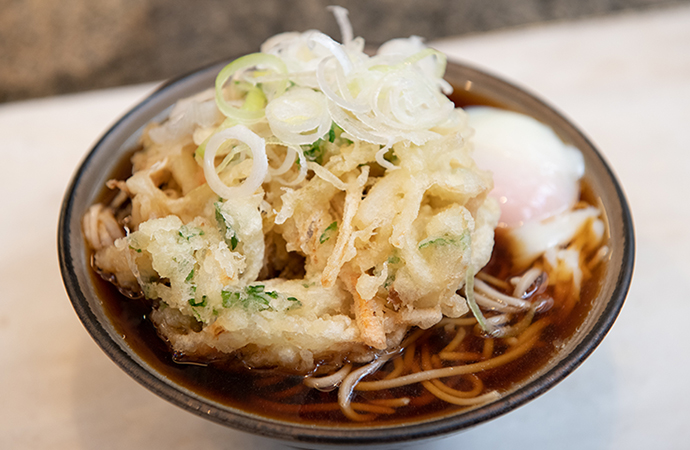
  • Kameya, Shinjuku: The Best Standing Soba in Tokyo, for ¥570

    Kameya, Shinjuku: The Best Standing Soba in Tokyo, for ¥570

    Standing soba is the most-eaten restaurant food in Tokyo and the least-written-about. Nobody flies here for it. That is exactly why it is worth ten minutes of your trip.

    The call

    Kameya, in Omoide Yokocho, two minutes from Shinjuku West Exit. The writer of this site has eaten at a great many standing soba counters in Tokyo. This is the best bowl of the lot — not the most famous, not the cheapest, the best.

    Order the ganso tenmatama soba, ¥570. Eat it standing. Leave in ten minutes. It will be one of the cheapest things you do in Japan and one of the ones you describe when you get home.

    What standing soba actually is

    A word on the category, because English guides skip it entirely.

    Tachigui soba — standing soba — is commuter infrastructure. There are counters in and beside almost every station in Tokyo. You go in, you eat a bowl of buckwheat noodles in hot broth in under ten minutes, standing up, and you carry on to work. It costs the price of a coffee. Millions of people do this several times a week and think nothing of it.

    It is not street food and it is not a tourist experience. It is the closest thing Tokyo has to a canteen, and the good ones are very good indeed — which is where Kameya comes in.

    The shop

    Kameya opened in 1971 in Omoide Yokocho, the lane of tiny post-war eating houses wedged under the tracks by Shinjuku’s west side. Fifty-five years later the Shinjuku shop is still the original of what is now a small group with branches in Kanda and Shimbashi.

    Eight places at a counter. No chairs. No reservations. Cash only.

    The bowl

    The house dish, unchanged for over fifty years, is the ganso tenmatama soba: buckwheat noodles, a kakiage fritter of onion, shungiku and carrot fried to order, and a soft onsen egg. It arrives with shredded raw spring onion and a dab of wasabi, in a black bowl, and the fritter is wider than the bowl’s rim.

    Break the egg into the broth before you start. The yolk thickens it; that is the whole design of the dish. Then eat the kakiage fast, while the outside is still crisp and the underside has begun to go soft in the soup — the two textures at once are the point, and they do not last.

    There is a cold version too, which is what you want in a Tokyo August.

    The part that does not add up

    Here is why this bowl is worth writing about rather than just eating.

    • The noodles are made in their own factory every morning — that day’s quantity only — from a blend of buckwheat and wheat flour specified for this shop
    • The broth uses hon-karebushi bonito, the slow-cured grade, and kombu from Hakodate
    • The kaeshi, the soy-and-sugar base that gives the broth its backbone, is aged at least 45 days
    • None of the three contains MSG

    That is the specification sheet of a restaurant. It is being executed at a standing counter, for ¥570, for people who eat it in nine minutes on the way to an office.

    The gap between those two facts is the most Japanese thing on this website.

    Ordering it without Japanese

    Easier than it looks. There are English, Chinese and Korean menus — a 1971 standing soba counter in an alley under the railway has translated its menu, which tells you something about who has been turning up.

    Say tenmatama soba, or point. Pay cash. Stand at the counter. Nobody expects conversation and nobody will mind how you eat.

    Two small things that make you look like you have done this before: do not linger after the bowl is empty — eight places and a queue — and put your rucksack between your feet rather than on the counter.

    Practical

    What to order Ganso tenmatama soba ¥570. Tempura soba ¥500, tororo kombu soba ¥450, cold versions around ¥550. Nothing on the menu passes ¥1,000
    Hours 06:00–23:00, closed Sundays
    A warning about the hours It ran 24 hours for years, and older listings and signs still say so. That was suspended in June 2026. Do not plan a 3am bowl
    Where 1-2-10 Nishi-Shinjuku, in Omoide Yokocho. Two minutes from the JR Shinjuku West Exit, four from Seibu-Shinjuku
    Seats Eight, counter only, standing. No reservations. Non-smoking
    Payment Cash only. No cards, no IC, no QR
    Also Handmade onigiri, takeaway, and bottled Coca-Cola, which is a small joy of its own

    Skip it if…

    • …you want to sit down. There are no chairs, and that is not an oversight
    • …you are a group of four or more. Eight places means one or two people
    • …you have a suitcase with you. The counter has no room for it — and the West Exit lockers are two minutes away, which is the entire reason we mentioned this shop in the Shinjuku luggage guide
    • …it is Sunday

    The local test

    Would people here actually choose this? It is second in Shinjuku’s soba ranking on Tabelog across more than 1,700 reviews, and nearly 36,000 people have saved it — from a shop with eight standing places. That is not a tourist number. That is commuters voting with their feet, every morning, for fifty-five years.

    Go at 7am before the crowds, or at 10pm on your way back to the hotel. Both are correct.


    Prices, hours and details as of September 2026 — the 24-hour opening in particular is currently suspended, so check before a late-night visit. Corrections via the contact page.

  • Japanese Pharmacy Guide: What to Buy, and What You Cannot Take Home (2026)

    Japanese Pharmacy Guide: What to Buy, and What You Cannot Take Home (2026)

    Japanese drugstores are full of small, cheap, very good remedies. They are also full of things that are illegal to carry into some countries. Both halves of this matter.

    The call

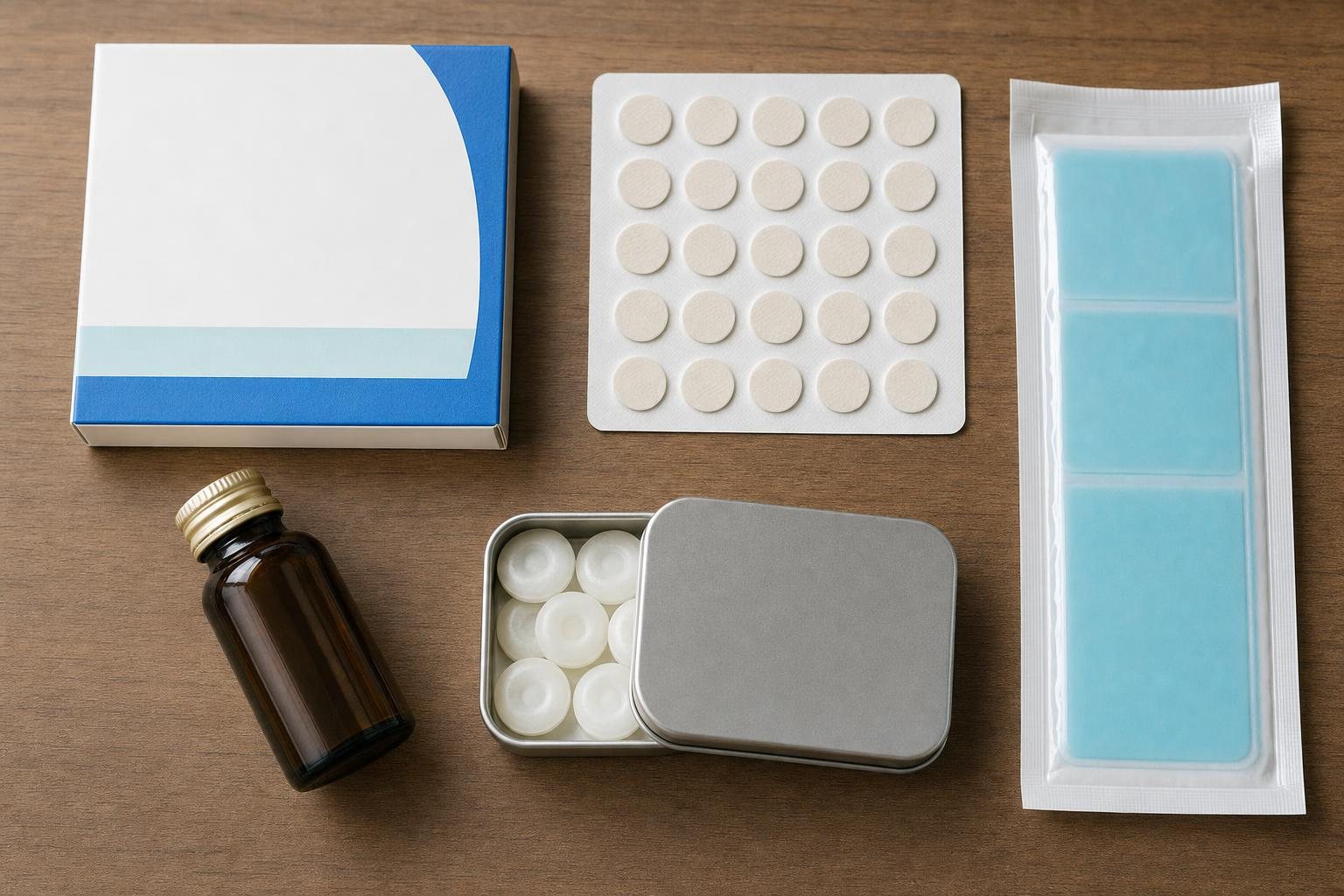
    Buy the topical stuff. Cooling forehead sheets, Salonpas and ROIHI-TSUBOKO patches, cooling leg sheets, throat lozenges. Cheap, effective, hard to find abroad, and legally uncomplicated.

    Be careful with cough and cold medicine. Several common Japanese cold remedies contain dihydrocodeine, which is a controlled substance in the UAE, Singapore and elsewhere. This is the one genuine legal risk on a Japanese pharmacy run.

    Buying a boxful?

    Patches, lozenges and cooling sheets add up fast. The Don Quijote tourist coupon takes 5% off over ¥10,000, 7% over ¥30,000, stacked on tax-free — worth having in your phone before you start.

    Get the Don Quijote coupon →

    And don’t bring your own stimulants in. Pseudoephedrine and Adderall are prohibited under Japan’s Stimulants Control Act, with no simple import route.

    What’s worth buying

    Cooling forehead sheets (Netsusama Sheet)

    Kobayashi Pharmaceutical. About ¥470–650 for 16 adult sheets. Gel patches you stick on your forehead for fever or a hangover; they stay cold for hours. Every Japanese household has a box and most visitors have never seen them.

    Salonpas and ROIHI-TSUBOKO patches

    Salonpas (Hisamitsu) is the famous one: ¥555 for 40 sheets, ¥821 for 80. ROIHI-TSUBOKO — the little round brown ones — is made by Nichiban, not Hisamitsu as half the internet claims. Around ¥1,320 for 78 sheets at list, often much less. These are the single most-bought item by returning visitors, and the reason is that they work and the equivalent abroad costs several times more.

    Cooling leg sheets (Kyusoku Jikan)

    Lion. You stick them on your calves overnight after a day of walking 25,000 steps around Kyoto. Roughly ¥900 for a pack. Note some formats may be discontinued — check what’s on the shelf.

    Ryukakusan throat lozenges

    A herbal powder and lozenge line that’s been made since the Edo period. Expect roughly ¥350–500 for a bag. Good for the dry-aeroplane-throat problem.

    Ohta’s Isan stomach powder

    Made by Ohta Isan — an independent company, not Sato Pharmaceutical. About ¥657 for 75g, or tablets from ¥583. For the specific problem of having eaten too much. Note the original powder formulation was reworked around late 2025, so the box may look different from older recommendations.

    Seirogan

    Taiko Pharmaceutical, ¥1,100 for 100 pills. An anti-diarrhoeal that has been sold since 1902 and smells overwhelmingly of creosote. Perfectly legal to carry; just be aware your suitcase will smell of it if the bottle isn’t sealed.

    Cabagin Kowa

    A stomach remedy built around cabbage extract. ¥1,780–2,180 for 200–300 tablets. Popular with people who are drinking their way through Japan.

    Motion sickness tablets

    Travelmin (Eisai) comes in several versions including a less-drowsy formula and a children’s one, from about ¥600 for six. Worth having for winding mountain roads to Hakone or a rough boat to Miyajima.

    Eye drops: a note of caution

    Japanese eye drops, especially the strongly mentholated Rohto ones, are a famous souvenir. Two honest points.

    First, the cooling sensation isn’t the treatment. Rohto’s own research materials acknowledge that higher menthol increases irritation, and describe developing technology specifically to reduce it. Japanese health media and clinicians make the same point: menthol doesn’t treat eye fatigue.

    Second, over-the-counter drops contain more preservative than prescription ones, and using them many times a day over long periods carries a corneal-irritation risk. So: don’t exceed the stated frequency (usually five or six times a day), and don’t read “stings more” as “works better.”

    The legal part. Please read it.

    Taking Japanese cold medicine home

    Several widely sold Japanese cough and cold products — including items in the Benza Block and Pabron ranges — contain dihydrocodeine phosphate. In Japan this is ordinary over-the-counter stock. Elsewhere it is not:

    • Singapore — dihydrocodeine is a Class B controlled drug. Unlicensed import can bring fines up to S$10,000 and up to two years’ imprisonment
    • UAE — codeine-type drugs are Schedule 2 and require a permit from the health ministry plus the original prescription. Undeclared possession is treated as unauthorised possession of a controlled drug, with imprisonment and substantial fines
    • Greece — codeine is handled strictly; bringing it in generally requires prior authorisation or a Schengen certificate for controlled medicines

    The rule to follow: check your destination’s own health ministry or customs page — not a travel blog — before carrying any Japanese cough or cold remedy home. Keep it in the original box, and declare it if in doubt. A ¥900 box of cold tablets is not worth a customs problem.

    Bringing your own medication into Japan

    The mirror image, and it catches more people. Pseudoephedrine and amphetamine-based medicines such as Adderall are prohibited under Japan’s Stimulants Control Act. That includes the original formulation of some common Western decongestants. There is no easy exemption.

    For prescription medicines generally — and for anything narcotic or psychotropic — you may need a Yakkan Shoumei (import certificate) from the Ministry of Health, arranged in advance. If you take regular medication, look this up before you fly, not at the airport.

    The pharmacist counter

    Some Japanese medicines are classed as yō-shidō iyakuhin — requiring guidance — and can only be sold face to face by a licensed pharmacist, not by the ordinary registered seller who staffs most drugstore aisles. These are typically newly switched prescription-to-OTC products.

    Practically: if a product is behind the counter and someone in a white coat wants to talk to you about it, that’s the system working, and the conversation is worth having. Rules here were being reformed through 2025–26, so what’s available online versus in person is in flux.

    What tourists get wrong

    • Assuming Western dosing. Japanese OTC doses are often calibrated to a lower average body weight. Don’t double up on your own initiative — ask the pharmacist
    • Buying supplements thinking they’re medicine. The shelves sit side by side and the packaging looks similar
    • Not being able to read the label. Use your phone’s camera translation on the box before you buy, not after. Osaka Prefecture publishes an official multilingual pharmacy-counter manual precisely because this is a recognised problem
    • Treating strong sensation as strong medicine. See eye drops, above

    FAQ

    What’s the one thing to buy?
    ROIHI-TSUBOKO. Small, light, cheap, and people ask you to bring more next time.

    Is any of this cheaper at Donki?
    Not reliably — compare. Donki guide here.

    Can I claim tax-free on medicine?
    Yes, medicines count as consumables. Until 31 October 2026 that means a sealed bag you mustn’t open; after 1 November the sealed-bag rule goes and you claim the tax back at the airport instead. Details.

    Where do I find an English-speaking pharmacist?
    Larger Matsumoto Kiyoshi and Welcia branches in tourist districts. Failing that, translate the box and point.

    The bottom line

    Load up on patches, cooling sheets and lozenges — they’re the best-value souvenirs in Japan and nobody regrets them. Read the ingredients on anything for coughs and colds, and check your own country’s rules before it goes in the suitcase.

    See also: the wider drugstore shortlist and skincare worth buying.

    One last thing

    Patches and lozenges are the souvenirs people ask you to bring next time. If you are buying in bulk, the Don Quijote coupon stacks on top of tax-free.

    Get the Don Quijote coupon →


    Prices are typical retail as of September 2026, not manufacturer list, and vary by shop. This is general information, not medical or legal advice — verify drug rules with your destination country’s own authorities and speak to a pharmacist about anything you intend to take. Corrections via the contact page. Some links here are paid affiliate links.
  • Last-Minute Shopping at Narita and Haneda: What’s Worth It (2026)

    Last-Minute Shopping at Narita and Haneda: What’s Worth It (2026)

    You have two hours at Narita or Haneda and a nagging feeling you forgot something. Here’s what’s actually worth buying airside, what you’re overpaying for, and the rule that ruins people’s last hour.

    The call

    Buy alcohol, tobacco and premium fragrance airside. Duty-free genuinely excludes both consumption tax and customs duty on these, so the saving is real.

    Don’t buy electronics or general souvenirs airside. Bic Camera and Yodobashi in town are cheaper on the former; the latter are marked up.

    Don’t leave your tax-free paperwork to the airport if you’re departing on or after 1 November 2026. From that date the refund step happens before bag drop, and missing it means losing the money.

    Duty-free and tax-free are not the same thing

    This confuses almost everyone, and the distinction matters because the two systems behave differently.

    Airside duty-free In-town tax-free
    What’s excluded Consumption tax and customs/liquor/tobacco duty Consumption tax only
    Where After security and immigration Shops in the city
    Minimum spend None ¥5,000 before tax
    Paperwork Passport and boarding pass at the till. Done Passport at purchase, plus an airport step from Nov 2026

    The practical upshot: the 1 November 2026 tax-free reform does not affect airside duty-free at all. Duty-free shopping works exactly as it always has. It’s your in-town purchases that now need attention at the airport.

    The step you cannot skip (from 1 November 2026)

    If you bought anything tax-free in town on or after 1 November 2026, you paid the full price and the tax comes back to you only after customs verifies the goods left with you. That happens at a tax-free procedure terminal in the departure lobby — before you check your bags in.

    Once the suitcase is on the belt, you can’t produce it for inspection, and the refund is gone. Terminal first, then check-in. At Narita, Haneda and five other major airports you can do the first part through Visit Japan Web in the designated Wi-Fi zones instead of queueing at a kiosk. Full walkthrough: what changes on 1 November.

    Where the shops are

    Narita

    Terminal 1 has Narita Nakamise in the South Wing — the airport’s own description is Japan’s largest airport duty-free and brand mall — strongest on traditional goods: lacquerware, crafts, kimono-print items. Landside gift shops (open roughly 7:00–21:00) are accessible before security, which matters if someone is seeing you off. Airside there are Japan Duty Free outlets in both the North and South wings plus an ANA duty-free shop. The 5th floor has an observation deck with shopping attached.

    Terminal 2 splits duty-free by category — separate cosmetics/perfume, liquor/tobacco and general outlets, plus JAL Duty Free. Note that some duty-free shops at Narita are arrivals-only, for people landing; easy to walk into by mistake when departing.

    Hours run roughly 6:30/7:00 to 21:00/22:00. Narita is not a 24-hour shopping airport — a very early or overnight departure may find things shut.

    Haneda

    Terminal 3 (international) is the better airport for this. Edo Koji on the 4th floor is a recreated Edo-period streetscape with two food alleys, and it’s genuinely pleasant rather than merely a shopping concourse. The 5th floor has Tokyo Pop Town for anime and character goods, a 24-hour observation deck, and a Don Quijote nearby for the things you forgot.

    Haneda T3 also has real 24-hour options — a 24h Air LAWSON on 1F, a Seven-Eleven airside, and a handful of restaurants including an Edo Koji ramen shop. Most retail keeps normal hours, so check the per-store listing, but if your flight is at 6am Haneda is far kinder than Narita.

    Terminal 2 is primarily domestic, with maker counters (Tokyo Banana, Royce’, regional specialities) and a 5F observation-deck shopping area.

    What’s worth buying airside

    • Alcohol — the duty exclusion is real. Japanese whisky, sake, umeshu. Note the checked-baggage limit below
    • Tobacco — same logic
    • Premium fragrance and prestige cosmetics — competitive, and no ¥5,000 minimum to worry about
    • Crafts and traditional goods at Narita Nakamise — a genuinely good selection you won’t have seen in a convenience store
    • The thing you forgot. Convenience has a value and it’s fine to pay it once

    What’s overpriced airside

    • Electronics. Bic Camera and Yodobashi in town, with their own tax-free desks, are the answer
    • Snacks and standard souvenirs. A supermarket, a station depachika, or Donki with the coupon all beat the airport
    • Drugstore items. Buy these in a drugstore. Shortlist here

    The liquid rules, which is where people lose things

    No single container over 100ml in your carry-on, all of them fitting in one one-litre resealable bag. This applies to international departures from Japan and it is enforced.

    So: that 500ml bottle of hatomugi lotion, the 230ml cleansing oil, the sake you bought in Kyoto — checked baggage. If you’ve already checked in and it’s in your hand luggage, you will be surrendering it.

    The exception: liquids bought airside, after security, can exceed 100ml. They’re sealed in a tamper-evident bag with the receipt. Keep the seal intact — if you’re connecting through another country and the seal is broken, or that airport doesn’t recognise the bag, you can lose it at the second checkpoint.

    Alcohol in checked baggage: up to 5 litres per person for anything between 24% and 70% ABV, in unopened retail packaging. Under 24% isn’t limited by this rule. Over 70% cannot fly at all. Airlines can be stricter, so check yours.

    How much time do you actually need

    No airport publishes a “leave this long for shopping” figure. The workable version: three hours before an international flight as the baseline, and if you have in-town tax-free receipts to process from November 2026, add an hour. The tax-free terminal is new, nobody has done it before, and the queues in the first months will be the worst they’ll ever be.

    Most of the interesting shops are airside, so the sequence is: tax-free terminal → check bags → security and immigration → shop.

    FAQ

    Can I claim the in-town tax refund on something I bought at the airport?
    No. Airside purchases are already duty-free at the till — there’s nothing to refund. The two systems are separate.

    Is Haneda or Narita better for last-minute shopping?
    Haneda T3, comfortably. Better hours, better atmosphere, some 24-hour options.

    I have a 6am flight from Narita.
    Assume the shops are shut. Buy what you need the day before.

    Where do I put my suitcase while I shop in town on my last day?
    Here are the options — though if you’re flying out, checking in early and shopping bag-free is the cheapest version.

    The bottom line

    Alcohol and fragrance airside, everything else in town. Liquids over 100ml in the hold. And if you’re departing on or after 1 November 2026 with tax-free receipts in your pocket, do the refund terminal before you hand over your suitcase.


    Shop hours and terminal details as of September 2026 and subject to change; confirm on the airport’s own site before relying on them. Corrections via the contact page.

  • What to Actually Buy at Don Quijote — and the Free Coupon First (2026)

    What to Actually Buy at Don Quijote — and the Free Coupon First (2026)

    Somebody built that. A person decided the wall of animal-face masks should go there, at that price, in that order. And that person is quite possibly a part-timer who has never asked a manager’s permission for anything.

    The call

    Get the coupon before you go in. Free, thirty seconds, worth 5% over ¥10,000 or 7% over ¥30,000 on top of the tax exemption. No signup.

    Buy snacks, kitchen tools, character goods, cosmetics. Skip electronics, groceries, clothes, whisky and — people really do this — a suitcase.

    Go after midnight if your body clock is still somewhere over the Pacific. Most city branches never close, and at 1am the place is yours.

    Do this first

    Show it on your phone at the register: 5% off over ¥10,000, 7% over ¥30,000, on top of tax-free. Around 600 stores, no signup, no app.

    Get the Don Quijote coupon →

    The thing to understand about Donki

    Every guide describes Don Quijote as chaotic. Almost none explain why, and the why is the most interesting fact about Japanese retail.

    At Donki, the person who decides what a shelf sells, what it costs and how it looks is the staff member who works that section — including the part-timers, who the company calls Mates. They own a category: home appliances, snacks, cosmetics. They do the buying. They set the prices. They build the display. Some of them negotiate directly with manufacturers.

    There is no planogram handed down from head office telling them where the shampoo goes. A Nikkei Business piece on the company was headlined, flatly, “there is no manual in the stores.” Another described the internal rule that a display may not repeat last year’s. Copying yourself is the one thing you are not allowed to do.

    So when you stand in front of a hand-lettered sign in three colours, mounted above a pyramid of instant noodles and a bin of novelty socks, you are not looking at corporate strategy. You are looking at one person’s opinion about what will sell in this neighbourhood this week — written by hand, because they wrote it.

    The founder, Takao Yasuda, built the company on this. It now turns over more than ¥2 trillion a year and is Japan’s fourth-largest retailer. The chaos is not a failure of discipline. It is the product.

    Which is also why every branch is different, and why locals have a favourite one. You are not shopping in a chain. You are shopping in someone’s shop, and the someone changes when you cross town.

    Practical consequences of a store built like this

    You cannot scan it from the door. That is deliberate — the technique is called atsuryoku chinretsu, compression display. You have to walk it, and while walking it you find the thing you didn’t know existed. It works on everyone, including us.

    Don’t bring a suitcase in. The aisles fit one person, not a person and a large case, and the queue behind you will be far too polite to mention it. Park the bag first.

    The tax-free counter may be nowhere near the tills — 7F at the Shibuya flagship. Budget for the lift.

    Ask someone. This is the part visitors never try. The staff member in that aisle chose the stock in that aisle. They know exactly which of the four sunscreens moves fastest and why. It is the best product advice available in Tokyo and it is free.

    The song

    You will hear it four seconds after entering. “Miracle Shopping,” written and sung in 1999 by a woman who worked for the company, playing on loop in every branch since.

    It has become genuinely iconic — enough that in 2024, Bruno Mars made a commercial for the chain. Four bars, twenty-five years, one former employee’s song. Japanese retail does not usually produce folk music.

    The coupon, and the arithmetic nobody does

    People assume 10% tax-free plus 7% coupon is 17% off. It isn’t. Tax-free doesn’t take 10% off the shelf price — it removes the tax already inside it, about 9.1% — and the coupon then applies to what’s left.

    Spend (pre-tax) Coupon Real total saving
    ¥10,000–29,999 5% about 13.6%
    ¥30,000+ 7% about 15.5%

    Rules, each of which has ruined somebody’s evening:

    • A screenshot won’t work. The page must be live. Donki provides free in-store Wi-Fi, which tells you how often this happens
    • Show it before scanning starts. Afterwards it’s void
    • One use. It dies when you tap “Used”
    • Excluded: alcohol, tobacco, prepaid cards, games consoles, single items over ¥100,000 — and excluded items don’t count toward the threshold. ¥9,000 of snacks plus a ¥4,000 bottle of whisky earns you nothing
    • No stacking with a majica card or other in-store offers

    Tax-free separately needs ¥5,000 before tax and your physical passport. Not a photo of it.

    And if you’re here after 1 November 2026: the tax comes back at the airport now, not at the till. The coupon is unaffected. What changes.

    What’s worth buying

    The snack wall. Regional and limited-run KitKats — wasabi, matcha, sake, prefecture editions that exist for six weeks and then never again. ¥300 a small pack, ¥900–1,000 a gift box. The one souvenir that has never disappointed anybody’s colleagues.

    Kitchen tools. Onigiri moulds, sesame grinders, a device whose sole function is to make a boiled egg square. Cheap, genuinely used at home afterwards, and nobody plans for it.

    Character goods and gacha. Budget forty minutes you hadn’t allocated.

    Cosmetics — big range, competitive, but not automatically cheapest. Price-check against Sundrug or Matsumoto Kiyoshi. What’s worth the suitcase space.

    Second-hand luxury at some branches, notably Shinjuku Kabukicho — used Vuitton, Chanel, Gucci, authenticated through the industry anti-counterfeiting association. Two catches: single items over ¥100,000 lose the coupon, and your own country’s duty can erase the whole saving.

    What to buy elsewhere

    Not here Here instead
    Electronics Yodobashi or Bic Camera — cheaper, better tax-free desks
    Fresh food and daily groceries A supermarket, or a convenience store
    Japanese whisky Compare first — markups on Yamazaki and Hibiki are widely reported, and alcohol is coupon-excluded anyway
    Basic clothing Uniqlo or GU
    A suitcase It will get you home and no further

    MEGA or standard

    MEGA branches add a full supermarket floor and several merchandise floors. For a souvenir haul, go MEGA. More floors, more of everything, and a properly staffed tax-free counter.

    FAQ

    Which branch?
    MEGA Shibuya for range. Shinjuku Kabukicho for second-hand luxury. There’s one in Asakusa’s Ekimise building since June 2026, useful if you’re already at Senso-ji.

    Worth the coupon under ¥10,000?
    It does nothing below that. Just do tax-free above ¥5,000.

    Coupon and tax-free together?
    Yes, same counter, same passport. Coupon first.

    Cheaper than a drugstore for medicine?
    Not reliably. What’s worth buying, and what’s illegal to take home.

    The bottom line

    Coupon open, suitcase elsewhere, arrive late, buy snacks and kitchen tools and one item you cannot justify.

    And when you get to a display that stops you — the one built like a shrine to a single flavour of Pocky — remember that somebody’s shift went into it, and they were told not to do what they did last year.

    Before you go in

    One tap, no signup, shown at the register. Void if you present it after payment starts, so have it open before you queue.

    Get the Don Quijote coupon →


    Coupon terms, store details and hours as of September 2026 and subject to change — confirm on the coupon page before you shop. Corrections via the contact page. Some links here are paid affiliate links.

  • Japanese Skincare Worth Buying (and What to Skip) — 2026

    Japanese Skincare Worth Buying (and What to Skip) — 2026

    Japan is genuinely world-class at two things in skincare and merely fine at the rest. Buying the first group is a bargain. Buying the second is paying airfare for products you can get at home.

    The call

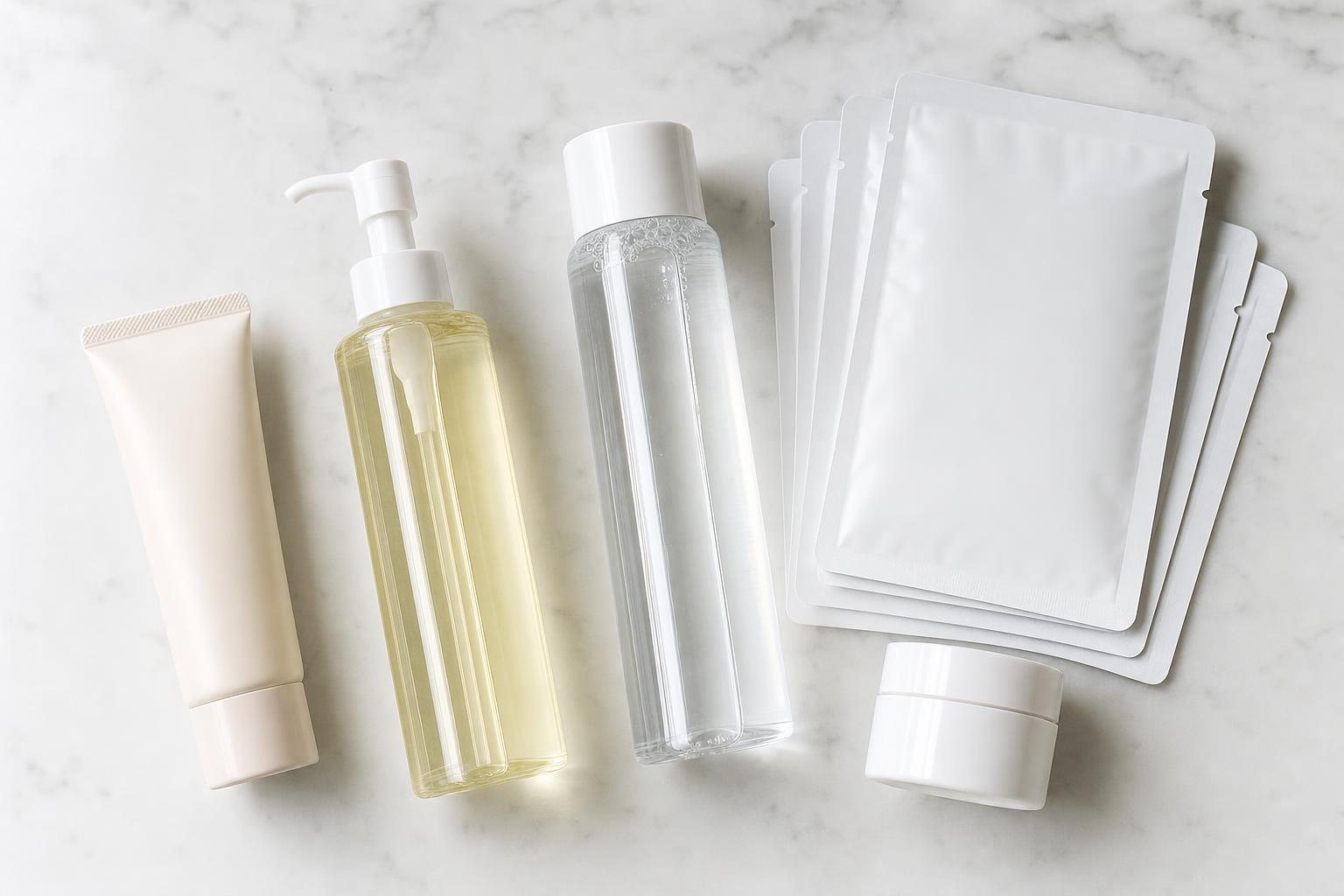
    Buy sunscreen and cleansing oil. These are the two categories where Japanese products are both better regarded and dramatically cheaper here than abroad. A ¥800 bottle of Biore UV Aqua Rich sells for three times that as an import.

    Buy sheet masks by the box if you use them — the per-sheet price collapses.

    Skip cica products and Western luxury brands. Much of the “cica” on Japanese shelves is imported Korean stock, and global prestige brands aren’t meaningfully cheaper here.

    Sunscreen: the one to actually stock up on

    Japan invented the PA rating you see next to SPF. SPF measures UVB protection; PA measures UVA, from PA+ to PA++++. Roughly: PA+ is a PPD of 2–4, PA++++ is 16 or above. If a sunscreen says SPF50+ PA++++, it’s the top of both scales.

    The reason people fill suitcases with it is texture. Japanese sunscreens are formulated to feel like nothing, which is why people actually reapply them.

    Product Size Typical price
    Biore UV Aqua Rich Watery Essence 70g ¥700–900
    Anessa (Shiseido) ~60ml ¥2,500–3,300
    Skin Aqua (Rohto) 70–110g ¥1,000–2,000

    Biore is the value pick and the one to buy several of. Anessa is the premium one and is reported to run 30–40% cheaper in Japan than abroad.

    Cleansing oils and balms

    The other genuine bargain. A 230ml bottle of Biore cleansing oil runs ¥700–900 in a Japanese drugstore against $12–15 as an import. Softymo and DHC are in the same territory. If you wear sunscreen daily — and after reading the section above you should — you need one of these to get it off.

    Sheet masks

    Buy the box, not the packet. Lululun is ¥385–550 for seven sheets but ¥1,650–1,980 for thirty-two. Saborino, the morning mask that claims to replace your whole routine in 60 seconds, is about ¥1,300 for twenty-eight. These are the classic “buy an extra duffel” items.

    Lotions and the hatomugi thing

    Naturie Hatomugi Skin Conditioner, 500ml for about ¥650, is a long-running bestseller for a reason: it’s a huge bottle of a light, cheap hydrating lotion that people also use on their bodies and as a mask. It’s the single most Japanese purchase on this list.

    Hada Labo Gokujyun hyaluronic lotion is the more famous name and sits at a similar drugstore price point — noticeably cheaper than the $15–19 it costs as an import.

    If you have sensitive skin: Curel

    Kao’s Curel line is the one genuine specialist recommendation here — ceramide-focused, fragrance-free, built for reactive skin, and stocked in every drugstore. The Intensive Moisture Cream is around ¥1,700 for 40g. There isn’t a direct equivalent at that price in most countries.

    Vitamin C, cheaply

    Melano CC (Rohto) is the drugstore vitamin C serum that keeps winning comparisons against products five times the price. 20ml, and it sells abroad for $14–18. Prices move, but it’s well under that here.

    What to skip

    • Cica. A lot of what’s on Japanese shelves is imported Korean product. If cica is what you want, Korea or your home market is the place. Japan-made cica lines exist but they’re blends rather than a national specialty
    • Western luxury brands. Import costs mean they’re the same or more expensive here
    • Anything you saw on TikTok and haven’t matched to your skin. The drugstore aisle is a bad place to experiment at scale
    • Bulk-buying what your local shop already stocks. Weigh the saving against the checked-baggage allowance

    Where to buy

    Chain Good for Not good for
    Matsumoto Kiyoshi Everywhere, multilingual staff, widest tourist range Lowest prices
    Sundrug Consistently cheap staples, frequent discounts Tourist service
    Welcia Broad range, many open late Prime tourist locations
    @cosme store / Cosme Kitchen Discovering what’s trending Cheap basics
    Loft Gift-boxed sets Everyday prices

    Japan uses an “open price” system — there’s no manufacturer RRP — so the same box can differ by ¥300 between two shops on one street. Locals price-check. So should you.

    Two rules that will bite you at the airport

    Liquids over 100ml go in checked baggage. That 500ml bottle of hatomugi lotion and your 230ml cleansing oil cannot travel in your carry-on. Plan the packing before you plan the haul.

    If you are buying a lot of this

    Cosmetics count toward the Don Quijote tourist coupon: 5% off over ¥10,000, 7% over ¥30,000, on top of tax-free. Donki is not the cheapest for every item, but on a big cosmetics haul the coupon usually settles it.

    Get the Don Quijote coupon →

    Tax-free changes on 1 November 2026. Until then, cosmetics count as “consumables”: sealed in a bag you must not open until you leave, capped at ¥500,000 a day. From 1 November, the sealed bag and the cap both disappear — you’ll be able to buy skincare and use it in your hotel that night — but you’ll pay full price at the till and reclaim the tax at the airport. Full detail: what changes on 1 November.

    FAQ

    What’s the single best-value item?
    Biore UV Aqua Rich sunscreen. Buy three.

    Is Japanese sunscreen really better?
    Better regarded on texture and cosmetic feel, and Japan has filters approved here that aren’t available in some markets. “Better protection” is a stronger claim than the evidence supports — SPF50+ PA++++ is SPF50+ PA++++ wherever you buy it.

    Drugstore or Donki?
    Drugstore for range and pharmacist advice, Donki for a one-stop late-night haul with the coupon. Donki comparison here.

    How much can I take home?
    Most countries apply a “reasonable personal use” test rather than a fixed item limit, but they do apply value thresholds — see the customs section in the tax-free article.

    The bottom line

    Sunscreen, cleansing oil, a box of sheet masks, a big bottle of hatomugi lotion, Curel if your skin is difficult, Melano CC if you want vitamin C cheaply. That’s the list. Everything else is optional, and cica isn’t Japanese.

    See also: the wider drugstore shortlist.

    Before the last drugstore run

    If the haul is going to clear ¥10,000, the Don Quijote coupon is free money on top of tax-free. Grab it in the taxi.

    Get the Don Quijote coupon →


    Japan has no manufacturer RRP, so prices vary by shop and are indicative only, as of September 2026. Corrections via the contact page. Some links here are paid affiliate links.

  • Asakusa and Ueno Luggage Storage: The Tourist Centre Closed Its Service (2026)

    Asakusa and Ueno Luggage Storage: The Tourist Centre Closed Its Service (2026)

    One correction first, because almost every English guide still gets it wrong: the Asakusa Culture Tourist Information Center stopped storing luggage on 31 March 2026. If your plan was to leave a suitcase at the desk opposite Kaminarimon, it no longer exists.

    The call

    Asakusa is locker-poor. Four small station buildings serve one of Tokyo’s busiest tourist areas, and the banks are reported full by late morning at weekends and in peak season. Go straight to Tobu Asakusa Station, 2F, behind the main stairwell — the biggest bank in the area — or use a staffed counter.

    Ueno is better supplied, and the reason people need it is the museums: none of them will take a suitcase. Store at the station, carry a daypack into the park.

    Book ahead in Asakusa

    Four small station buildings serve the whole of Asakusa, and they fill by late morning. A booked spot is waiting for you. Flat rate per bag per day, any size, insured.

    Book storage in Asakusa or Ueno →

    ASAKUSA

    Where the lockers are

    • Tobu Asakusa Station, 2F behind the main stairwell — the largest bank in Asakusa. From outside, enter via the Central Exit, up the stairs, then turn away from the gates. Mix of old key lockers and touch-screen units, ¥300 / ¥400 / ¥500 / ¥700. Coins for the key type, coins or IC card for the automatic ones. A second, smaller bank sits between platforms 1 and 2 toward the north exit — small sizes only
    • Tokyo Metro Ginza Line Asakusa — by the elevator near Exit 1. Key-type, ¥300 / ¥500 / ¥700
    • Toei Asakusa Line — small banks at both the Kaminarimon and Komagatabashi gate areas. Touch-screen, multilingual, ¥300 / ¥500 / ¥700
    • Tsukuba Express Asakusa — B1 near Exit A1, under the stairs. The widest price range in the area, up to ¥800–1,200 for genuinely suitcase-capable sizes, accepting coins, ¥1,000 notes and IC cards. Worth the walk if the others are full

    Large lockers here measure about 355mm wide, 645mm deep and 868mm tall — the same standard spec as at Tokyo Station — a normal suitcase fits, a 30-inch case probably won’t.

    Staffed counters

    • Yamato Transport, Ekimise 1F (the building above Tobu Asakusa Station) — 10:00–19:00, ¥500 per item per day. The cheapest staffed option in the area, and they’ll courier a bag to your hotel
    • Sagawa Express, Asakusa Kaminarimon Service Center — near Kaminarimon, 9:00–19:00, ¥800 per item per day. Also does hotel delivery

    Note the distinction: the Tobu Tourist Information Center (Tobu’s own desk, near Ekimise) is a different place from the Taito City-run Culture Tourist Information Center that closed its storage service, and Tobu’s desk does offer bag storage. The two get confused constantly.

    Continuing to Skytree?

    Tokyo Solamachi at the base of Tokyo Skytree has its own lockers throughout the building, in five sizes: ¥300 / ¥500 / ¥600 / ¥800 / ¥1,000. If Asakusa’s lockers are full and Skytree is next on your list, that’s a genuine release valve — the two are one stop apart on the Tobu line.

    The river cruise

    Boats to Odaiba and Hamarikyu leave from Azumabashi pier, five minutes from Kaminarimon. The operator publishes rules for bicycles but no explicit suitcase restriction. That said, boarding involves a gangway and stairs and the decks are compact — take the bag to a locker first regardless.

    UENO

    Where the lockers are

    • Shinobazu Exit (mezzanine) — lockers in the connecting passageway, ¥400 / ¥500 / ¥600, key and automatic. This is also the closest exit to Ameyoko and to Keisei Ueno
    • Park Exit (3F) — automatic lockers just outside the gates, ¥400 / ¥500, plus more near the Panda Bridge exit toward the museums. Best large-locker odds
    • Central Gate (1F) — lockers just inside and near the gates
    • Iriya Exit (3F) — a few key lockers only. The thinnest of the four
    • Ameyoko — a bank inside the vending-machine corner of the market concourse, plus a separate locker room about two minutes from Keisei Ueno

    Around 300 lockers in total. Suitcase-capable sizes cluster at the Park Exit and Central Gate.

    The museums won’t take your bag

    This is the real reason to store at Ueno, and it surprises people:

    • Tokyo National Museum — coin-return lockers (¥100 back) in the Heiseikan entrance hall, behind the central stairs, and on Heiseikan 2F. Sized for daypacks, not suitcases
    • National Museum of Nature and Science — coin-return lockers in the Japan Gallery B1 and Global Gallery 1F, in three sizes, the largest of which can take a case — but they fill fast during special exhibitions
    • Ueno Royal Museum — coin-return lockers in the vestibule, before the entrance. No cloakroom
    • Tokyo Metropolitan Art Museum — free coin-return lockers in the lobbies of both wings. For special exhibitions, oversized items are checked at the exhibition entrance by staff

    None of the four offers a general checked-baggage cloakroom. Leave the case at the station.

    Arriving on the Skyliner from Narita

    Keisei Ueno is a small station with a modest locker bank, and it will not absorb a peak arrival. The walk to JR Ueno is about 300 metres — three minutes empty-handed, allow ten with a suitcase, because there are stairs and an underground arcade section. Aim for the Shinobazu or Park Exit banks, or book ahead.

    Book ahead in Asakusa or Ueno

    Both areas run out of lockers at the times you most want one. Booked storage is a flat rate per bag per day, any size, insured, and it is waiting for you.

    Book luggage storage →

    Time limits

    Standard across Tokyo Metro, JR East and by extension Toei, Tobu and TX: three consecutive days. After that the operator empties the locker and holds the contents for 30 days, then treats them as abandoned. The authoritative version is on the sticker on the locker itself.

    FAQ

    Can I still leave a bag at the Asakusa tourist centre?
    No. That service ended 31 March 2026. Older guides saying otherwise are out of date.

    Cheapest way to leave a suitcase in Asakusa?
    Yamato at Ekimise 1F, ¥500 a day, if you’re there between 10:00 and 19:00.

    When do Asakusa’s lockers fill?
    No operator publishes data. The reported pattern is mid-to-late morning at weekends, and much earlier during cherry blossom season, the summer festivals and New Year.

    Museum-hopping in Ueno with a suitcase — what’s the plan?
    Store at the Park Exit, walk in through the Panda Bridge exit, use the museums’ own ¥100-return lockers for your daypack.

    The bottom line

    Asakusa: Tobu 2F first, Tsukuba Express B1 if that’s full, Yamato at Ekimise if you want certainty for ¥500. Ueno: Park Exit for large, Shinobazu for Ameyoko, and don’t expect the museums to help.

    See also: the full Tokyo guide, Tokyo Station, getting in from the airports.


    Prices and hours as of September 2026. The Asakusa Culture Tourist Information Center’s luggage service ended 31 March 2026 per Taito City’s own notice. Corrections via the contact page. Some links here are paid affiliate links.
  • Shibuya Station Luggage Storage: Stop Trying the Hachiko Lockers (2026)

    Shibuya Station Luggage Storage: Stop Trying the Hachiko Lockers (2026)

    Shibuya has close to a thousand lockers and is still the hardest station in Tokyo to store a bag. Two reasons: everyone tries the same bank, and the station has been a building site for a decade.

    The call

    Skip the Hachiko Exit lockers. They’re the most convenient, which is why they’re full from morning. Every guide sends people there and they’re all fighting over the same doors.

    Go to Shibuya Mark City instead — specifically the 4F and 5F banks near the restaurants and the highway bus terminal. They’re the least contested lockers at Shibuya and still have large sizes free on weekends. 5F is also where the airport limousine bus leaves from.

    The reliable option at Shibuya

    Of all Tokyo stations this is the one where booking ahead earns its keep, because the Hachiko lockers are gone by mid-morning. Flat rate per bag, any size, insured.

    Book storage in Shibuya →

    Got a suitcase and a Shibuya Sky ticket? Solve storage first. Shibuya Sky bans large luggage on the deck and its own lockers only take day bags.

    Where the lockers are

    JR

    Outside the Hachiko gate: small ¥400, medium ¥500, large ¥600, IC cards accepted. Same tiers near the South gate. There’s also a cheaper ¥300 cash-only small bank down a stairway near the Central gate that most people walk past.

    Tokyo Metro (Ginza / Hanzomon / Fukutoshin)

    Metro confirms lockers on the Hanzomon and Fukutoshin concourses but doesn’t publish a floor map. In practice the clusters are at B1 Exit A2 (near Shibuya 109 — many large lockers), B1 Exit A4, B2 near Exits A1–A4, a B2 walkway bank near the information centre, and B2 near Exits B3–B4. The A2 bank runs small ¥400 / medium ¥500 / large ¥700.

    Shibuya Mark City — the answer

    • 1F, outside the gates at street level, including a golf-bag-size locker near the Keibunsha bookstore by the West Exit Inokashira gate
    • 2F, inside and outside the Inokashira Line gate
    • 4F and 5F — by the restaurants and the highway bus terminal. This is the bank to aim for

    Keio runs a live availability map for these at keiochika.co.jp.

    Shibuya Hikarie, B3F

    In the ShinQs locker room, directly connected to the Fukutoshin Line gates. Cheapest in Shibuya at ¥200 small / ¥300 large — but small sizes only, cashless only (no coins), and 10:00–21:00.

    Shibuya Scramble Square, 1F

    In front of the elevators, 10:00–21:00. Worth knowing what this isn’t: they’re slim and refrigerated lockers for shopping, not suitcase lockers. A separate cluster near B1 by the Kinokuniya supermarket (Exit B7) is the closest bank to the Shibuya Sky entrance.

    Two staffed counters

    • Wander Compass — B1 underground walkway next to Shibuya 109, near Exit A2. ¥900 per item per day, 10:00–19:00. Takes the things lockers can’t: strollers, instruments, oversized cases
    • shibuya-san — inside Shibuya Fukuras (Tokyu Plaza) 1F, right at the airport limousine bus stop. 10:00–19:30, small ¥700 / large ¥1,000, same-day pickup only

    The reliable option at Shibuya

    Of all Tokyo stations this is the one where booking ahead earns its keep. Flat rate per bag per day, any size, insured, and you are not competing for a door.

    Book luggage storage in Shibuya →

    Shibuya Sky: read this before you go up

    The observation deck does not allow travel luggage. Also barred: food and drink, loose hats, earphones, tripods and selfie sticks. Phones, glasses and a camera on a strap are fine.

    There are lockers at the 46F entrance, but they’re sized for a small bag or backpack (about 32 × 37.5 × 43cm) and cost a returnable ¥100. A suitcase will not go in one. Sort it at the station or a booked spot before you arrive — the Kinokuniya/B7 bank is the nearest.

    The redevelopment problem

    The Shibuya station-area rebuild is a joint Tokyu, JR East and Tokyo Metro project running in phases from around 2030 to 2034. Concourses have already been reshaped and locker banks move without announcement. No operator publishes “we relocated X lockers.”

    Practical consequence: treat any Shibuya locker map, including this one, as approximate, and check a live availability map before committing to a walk. The Keio map above is the most useful.

    Timing and time limits

    Reported pattern: the Hachiko banks are effectively full from the morning, every day, worse at weekends. The Mark City 4F/5F banks are the ones still open. Most operators cap storage at three to four days before clearing the locker; the operator’s phone number is posted on the unit.

    One Shibuya-specific risk: shutters on several station-area banks close after the last train (around 00:30). A bag left during the day may be unreachable until morning. If you’re out late in Shibuya, check the posted hours before you rely on picking it up at 2am.

    FAQ

    Cheapest locker in Shibuya?
    Hikarie B3F at ¥200–300, if your bag is small and you have an IC card. Then the ¥300 cash bank near the JR Central gate.

    Where do I put a big suitcase?
    Mark City 1F or 4F/5F, or Wander Compass at ¥900. Not Scramble Square.

    I land at Haneda and want to see Shibuya before check-in.
    The limousine bus drops at Shibuya Fukuras, and shibuya-san’s counter is in the same building. That’s the tidiest version of this plan.

    The bottom line

    Everyone goes to Hachiko; go to Mark City. Hikarie if the bag is small and you want to pay ¥200. Wander Compass if it’s oversized. And whatever you do, don’t turn up at Shibuya Sky towing a suitcase.

    See also: the full Tokyo guide, Shinjuku, Tokyo Station.

    While you are here: the best yakitori in Shibuya

    An aside, because the bag is in a Mark City locker and the whole point of a locker is the hours it gives you back.

    Forty seconds from those lockers, immediately right of the Keio Inokashira west exit, is Toritake — a three-floor charcoal yakitori and eel house that has been on that slope since 1963. It is on Tabelog’s Top 100 Yakitori list and it is entirely invisible to visitors, because it looks like an old building on a busy hill.

    Three things make it the right answer for someone who has just stowed a suitcase:

    • It opens at noon, every day of the year. Almost every other good yakitori shop in Tokyo opens at five and closes on Sundays
    • No reservation needed under five people. You walk in
    • It takes cards, which in this category of shop is unusual

    Skewers run about ¥333–383 and are grilled on eel skewers, which is why they arrive looking faintly absurd. Around ¥2,500 a head with a large bottle of lager.

    Read nextToritake, Shibuya: the only yakitori shop you need in Tokyo →What to order, why the skewers are the wrong size on purpose, and the eel they butcher in the building.


    Prices and locations as of September 2026. Shibuya is under active redevelopment and locker banks relocate — check a live availability map. Corrections via the contact page. Some links here are paid affiliate links.
  • Shinjuku Station Luggage Storage: 3,600 Lockers and How to Find One (2026)

    Shinjuku Station Luggage Storage: 3,600 Lockers and How to Find One (2026)

    Shinjuku has more lockers than any station in the world — somewhere around 3,600 — and finding one is still mostly luck if you don’t know which staircase to take.

    The call

    Need a large locker? Go underground on the West Exit side. That corridor is the biggest single cluster in the station and the reason Shinjuku is, despite the chaos, an easier station to store a bag than Shibuya or Asakusa.

    Catching a highway bus to Fuji, Hakone or Nikko? Use the New South Exit banks on the 2nd floor, next to Busta. Do not leave a bag in Busta’s own lockers for a whole day — see below.

    Reserve, rather than gamble

    Shinjuku has the most lockers in Tokyo and they still run out at the convenient exits. A booked spot removes the search. Flat rate per bag per day, any size, insured.

    Book storage near Shinjuku →

    Everything full? There are four staffed counters here, which is unusual and genuinely useful.

    Where the lockers are

    • West Exit, underground (B1–B2) — the big one. From the JR West Exit gates head toward the Odakyu department store basement escalators and into the long corridor. Hundreds of lockers in all sizes
    • East Exit, street level (near the old Hato Bus office, close to Studio Alta) — around 15 SS / 77 S / 47 M / 64 L. The best concentration of large lockers on this side. Note the East Exit layout has been reshuffled through 2025–26 as construction moves things around
    • East Exit, B1 underground passage — a handful of small banks just outside the Central-East and East gates
    • South Exit, 2F inside the gates — 80 S / 85 M / 76 L, near the JR–Odakyu transfer gate
    • New South Exit, 2F outside the gate — two banks, one by the Suica Penguin Square (15 S / 13 M / 41 L), one by the platform 13/14 escalators
    • B1 corridor toward platforms 5–6 (the Narita Express platforms) — JR East’s own guide calls this an anaba, a spot likely to still be free, because it’s off the main walking route. Inside the gates
    • Keio Line and Inokashira Line — ten separate locker locations on B1, with their own live availability map at keiochika.co.jp
    • Odakyu South Gate, 2F — two banks. Note Odakyu’s West Gate has none

    Kabukicho has no locker bank of its own. If you’re heading out for the evening there, the East Exit banks are your storage.

    While you are here: the best standing soba in Shinjuku

    An aside, because the bag is in a locker and you have an hour.

    Two minutes from the West Exit lockers is Omoide Yokocho — “memory alley” — a lane of tiny post-war eating houses wedged under the railway. Most visitors photograph the lanterns and walk on. Go into Kameya instead.

    Order the ganso tenmatama soba, ¥570. Buckwheat noodles in hot broth, a kakiage fritter of onion, shungiku and carrot fried to order, and a soft onsen egg on top. It has been the house dish for over fifty years.

    Now the part that should not add up. The noodles are made in their own factory every morning, that day’s quantity only. The broth uses hon-karebushi bonito and kombu from Hakodate. The kaeshi — the soy base — is aged at least 45 days. None of the three contains any MSG. That is the specification of a restaurant, and it is being served at a standing counter for the price of a coffee, to people who eat it in nine minutes on their way to work.

    The writer of this site has eaten at a great many standing soba counters in Tokyo. This is the best bowl of the lot. Not the most famous, not the cheapest — the best.

    Practical

    • ¥570 for the tenmatama. Plain tempura soba ¥500, tororo kombu ¥450. Nothing on the menu passes ¥1,000
    • 06:00–23:00, closed Sundays. It used to run 24 hours and the sign may still say so — that was suspended in June 2026, so do not plan a 3am bowl
    • Eight places, standing, no reservations. You order, you eat, you are out in ten minutes. Nobody expects conversation
    • Cash only — no cards, no IC, no QR. In this category of shop that is a good sign rather than a bad one, and the correlation is real
    • There are English, Chinese and Korean menus. A 1971 standing soba counter in an alley under the tracks has translated its menu, which tells you something about who has been coming
    • Opened 1971. The Shinjuku shop is the original; there are now branches in Kanda and Shimbashi

    Break the egg into the broth before you start. That is the entire point of the dish.

    Read nextKameya, Shinjuku: the best standing soba in Tokyo, for ¥570 →Why the specification of a ¥570 bowl reads like a restaurant’s, how to order it without Japanese, and the hours that changed in June 2026.

    Prices

    JR’s Multiecube lockers: SS ¥300, S ¥500, M ¥700, L ¥900, plus a ¥100–200 surcharge on M and L in peak seasons. Older non-Multiecube banks: SS ¥300, S ¥500, M ¥800, L ¥1,000.

    Modern units take coins and IC cards; old key-type ones are coin only. You can reserve a Multiecube locker up to a month ahead for ¥500 extra.

    The Busta Shinjuku trap

    Busta’s own lockers on the 4th floor look convenient, and for a two-hour wait they are. But they’re priced by time, not by day, and the meter resets every six hours:

    Size First block Then
    Small ¥100 / 60 min ¥500 per 6 hours
    Medium ¥100 / 40 min ¥600 per 6 hours
    Large ¥100 / 30 min ¥900 per 6 hours

    Leave a large bag there for a day and you’re looking at roughly ¥3,700 for a full 24 hours (¥100 for the first half hour, then four six-hour blocks) against ¥900–1,000 in an ordinary station locker fifty metres away. Maximum stay is 72 hours, they’re card and e-money only, and you unlock with a QR code on a printed receipt — lose the receipt and you have a problem.

    Use Busta’s lockers while you wait for a bus. Use the New South Exit banks for anything longer.

    Four staffed counters

    • Sagawa Cloak & Delivery — inside the Tokyo Tourist Information Center, Busta 3F (the bus gates are 4F; the counter is a floor below). 6:30–23:00, the longest hours of anything here. Around ¥800–1,500 by size. Also ships to your hotel, Haneda or Narita if you check in by 11:00
    • Keio Nekonote — underground by the Keio New Line gates, under Lumine 1. 8:30–21:00, ¥1,000 per item, and can arrange courier shipping
    • Odakyu Sightseeing Service Center — West and South Exit branches, by the Romancecar gates. Up to 160cm and 25kg, up to three days. West Exit check-in 8:00–16:00, South Exit until 18:30, pickup by about 19:00. If you’re going to Hakone this is also where luggage forwarding to your ryokan is arranged
    • ecbo cloak at Keio Department Store 2F — ¥800 a day, but online prepayment only, no walk-ups, and store hours (10:00–19:00)

    Guaranteed space, booked ahead

    Booked storage removes the search entirely, and unlike the department-store counters it covers more of the day. Flat rate per bag, any size, insured.

    Book luggage storage in Shinjuku →

    Timing

    No official occupancy data exists. The reported pattern is that large lockers at the obvious banks are mostly gone by 10am, while the awkward ones — the B1 corridor toward the Narita Express platforms, the deep West Exit stretch — hold out much longer. JR East effectively confirms this by labelling that corridor a likely-vacant spot in its own guide.

    FAQ

    How long can I leave a bag?
    Station lockers bill per 24 hours with caps of roughly three to four days depending on the operator. Busta is a hard 72 hours. Odakyu’s counter takes three days. Sagawa’s counter is the one to ask about longer.

    I’m catching an early highway bus.
    Sagawa’s 6:30 opening at Busta 3F is the earliest staffed option in the station.

    Is there anywhere near Shinjuku Gyoen?
    Use the South or New South Exit banks — they’re the closest side of the station to the garden.

    Can I leave a bag overnight and collect it after a night in Golden Gai?
    Yes, but note that many station-area banks are behind shutters that close after the last train. Check the posted hours on the bank you use before you rely on a 2am pickup.

    The bottom line

    West Exit underground for capacity, East Exit street level or New South for large lockers, Busta’s own lockers only for a short wait, and Sagawa on Busta 3F when everything else is shut or too big. Of Tokyo’s big stations, this is the one where persistence actually pays off.

    See also: the full Tokyo storage guide, Tokyo Station, and the Fuji day trip that starts at Busta.


    Locker counts and prices from JR East’s own station guide (August 2025 data) and operator sites, current as of September 2026. Shinjuku’s East Exit area is under construction and banks move. Corrections via the contact page. Some links here are paid affiliate links.
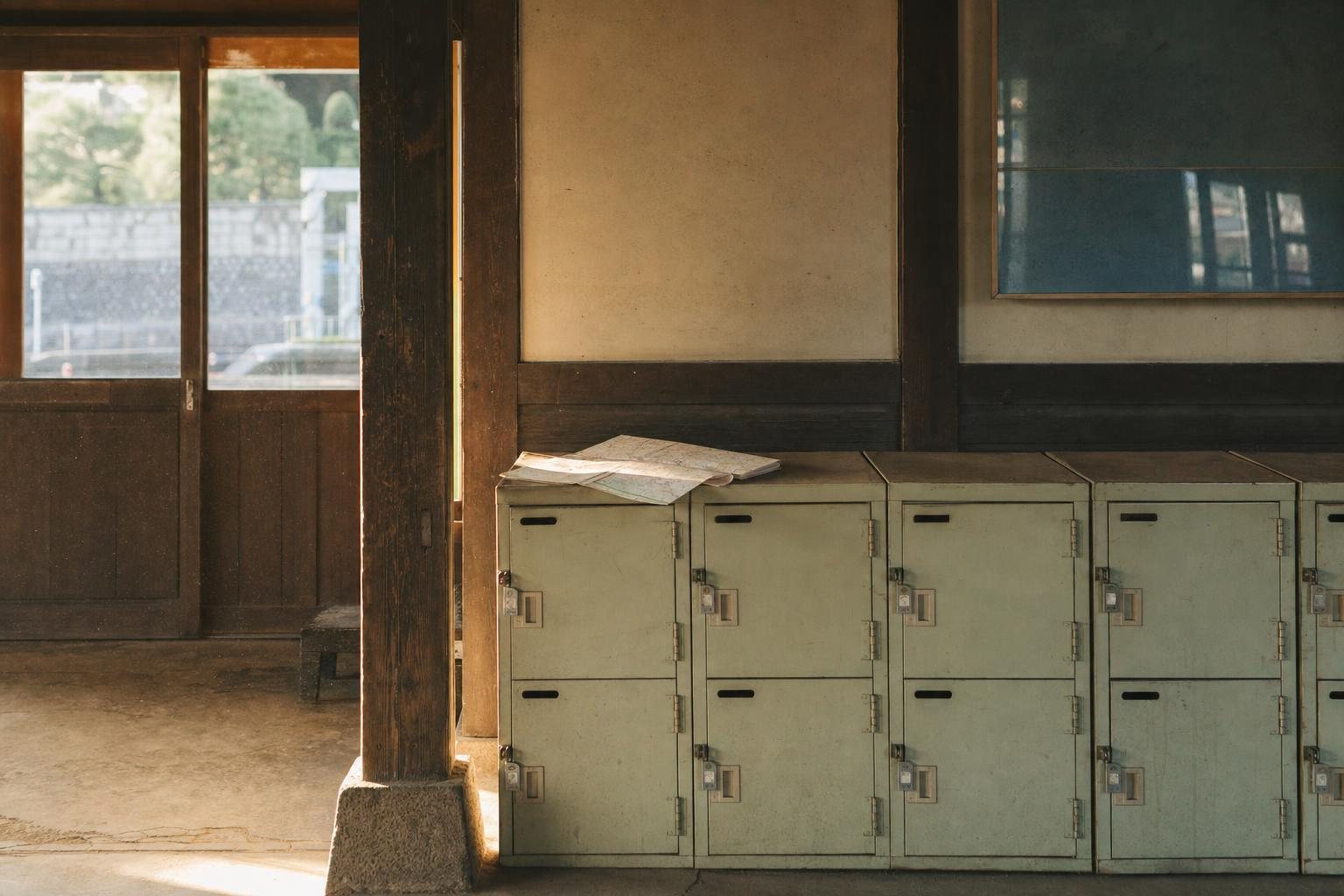
  • Tokyo Station Luggage Storage: Where the Lockers Actually Are (2026)

    Tokyo Station Luggage Storage: Where the Lockers Actually Are (2026)

    Tokyo Station has over a hundred locker banks and roughly 5,000 lockers, and people still walk out unable to find one. That’s a navigation problem, not a supply problem. Here’s the map.

    The call

    If you need a large locker, go straight to the B1 GRANSTA bank (inside the gates) — it has around 900 lockers including 40 large ones, the biggest single cluster in the station. If that’s full, go deeper: the B4 Sobu/Yokosuka platform level and the Keiyo Line passage stay free longest precisely because they’re a long walk.

    If you’re outside the ticket gates without a ticket, your options shrink a lot — head for the Yaesu North Exit bank or the Marunouchi North free passage.

    Reserve, rather than gamble

    At Tokyo Station a reserved spot is worth the small premium: you stop walking, and the bag is guaranteed a place. Flat rate per bag per day, any size, insured.

    Book storage near Tokyo Station →

    If your suitcase is 30 inches or you’re carrying skis, don’t hunt for a locker at all. Use a staffed counter.

    The one thing to check first: inside or outside the gates

    Tokyo Station’s locker banks are split between the paid area (inside the ticket gates) and the free area. This is the detail that ruins people’s afternoons: the biggest and best banks are inside, and if you’ve already exited, or you arrived by subway, you can’t reach them without buying a ticket.

    So decide before you tap out.

    The banks worth knowing

    Inside the gates

    Bank Roughly Notes
    B1 GRANSTA 728 S / 152 M / 40 L The big one. Follow GRANSTA mall signage after any underground central or north gate
    B4 Sobu / Yokosuka platform level Several hundred, many large Deep underground, long walk, best large-locker odds
    Keiyo Line passage 78 S / 33 M JR East’s own guide calls it “comparatively uncrowded.” Past the third moving walkway, on the left
    Marunouchi central gate 40 S / 19 M Most visible, therefore first to fill
    Marunouchi underground central/north 91 S / 37 M B1, small and medium only

    Outside the gates

    Bank Roughly Notes
    Yaesu North Exit 80 S / 51 M Nearest to the Shinkansen transfer gates
    Marunouchi North free passage 39 S / 26 M Use this if you haven’t tapped in yet
    Yaesu bus terminal (new) Reported ~283, incl. ski-size Opened March 2026 under the Yaesu bus terminal. Time-based pricing, not daily

    Prices

    Standard JR East sizes: SS ¥300, S ¥500, M ¥700–800, L ¥900–1,000 per day. During peak travel seasons the app-linked “Multiecube” lockers add a ¥100–200 surcharge on medium and large.

    Newer machines take Suica, PASMO, PayPay, WeChat Pay, Alipay and contactless cards. Some older underground units are still ¥100 coins only, so keep a few.

    You can reserve a locker in advance through Multiecube (multiecube.com) — up to a month ahead, for an extra ¥500 per box. For a tight connection with a big case, that ¥500 buys certainty, which is the whole problem at this station.

    Will a 28-inch suitcase fit?

    A large locker measures roughly 35cm wide × 65cm deep × 87cm tall (355 × 645 × 868mm is the common spec). A typical 28-inch case is about 75cm tall and 48cm wide, so it fits — but only if you turn it and the wheelbase isn’t unusually wide. Hardside spinners are the ones that don’t.

    A 30-inch case usually will not fit any standard locker here. Nor will skis, golf bags, or a bike box. That’s what the counters are for.

    Staffed counters (when lockers won’t do)

    • JR East Travel Service Center — Marunouchi North Exit, 1F, outside the gates. 8:30–20:00. ¥500 (under 100cm total) / ¥1,000 (under 200cm) / ¥2,000 (over). Max 250cm and 30kg. Same day only.
    • GRANSTA Cloak — B1 inside the gates. 8:30–21:00, drop-off until 20:30. Same prices. Same day only.
    • Sagawa Express Tokyo Service Center — Nihonbashi exit, in Tokyo Ekimae Ichibangai 1F. 7:00–21:00 and priced per day, so this is the one that takes bags overnight: ¥1,000 (under 100cm) to ¥2,000 (over 161cm). Also does same-day delivery to hotels and to Haneda.

    The pattern is worth internalising: JR’s counters are same-day; Sagawa’s is multi-day. If you need to leave a bag until tomorrow, there’s only one answer.

    Reserve instead of hunting

    If you are arriving with a big case at a busy hour, a booked storage spot near the station removes the whole problem. Flat rate per bag per day, any size, insured.

    Book luggage storage near Tokyo Station →

    Before you board a Shinkansen

    Relevant to almost everyone storing a bag here. On the Tokaido–Sanyo Shinkansen, luggage with a three-side total of 160–250cm counts as “oversized” and needs a reserved seat with oversized baggage space — the last row of each reserved car, which has a rack behind it. The seat costs no more than any other reserved seat, but if you turn up with an oversized case and no reservation, staff can charge a ¥1,000 handling fee. Over 250cm isn’t allowed on board at all.

    Under 160cm, ignore all of this. Strollers, sports equipment and musical instruments are also exempt from the reservation rule regardless of size.

    How long can you leave it?

    Three days. On day four the locker is opened, your things go to a JR East Smart Logistics storage facility, and the daily rate keeps accruing while they sit there. After 30 days unclaimed, they’re disposed of.

    Finding an empty one without walking

    • Multiecube (multiecube.com) — JR East’s own system. Real-time vacancy by station and size, plus advance reservation. Japanese-first but navigable
    • Station Navi — Tokyo Station’s own app, and since 2025 a web version reachable by QR codes on the in-station floor maps. Shows live Suica-locker vacancy and routes you there
    • LuggageSnap — English, free, updated every 15–30 minutes, with a Tokyo Station page. It’s an independent project rather than an official service, but it’s the easiest one to read in English

    FAQ

    When are the large lockers gone?
    No operator publishes occupancy data. The consistent pattern is that the convenient banks — Marunouchi central, Yaesu North — go first, from mid-morning, and worst of all during Golden Week, Obon and New Year. The far banks (B4, Keiyo) are the reliable fallback, which is why JR East promotes advance reservation rather than “arrive early.”

    Can I leave a bag overnight?
    Lockers: yes, up to three days. JR’s staffed counters: no, same-day only. Sagawa: yes.

    Is there anywhere for a bike box or skis?
    The counters, or the new Yaesu bus terminal hub, which reportedly includes ski-length lockers.

    I’m going to Disney.
    Then the Keiyo Line passage lockers are directly on your route, and they’re the least contested in the building.

    The bottom line

    Decide inside-or-outside the gates before you tap out. Head for B1 GRANSTA first, B4 or the Keiyo passage if it’s full, and a counter if the case is genuinely large. If the day matters — a Shinkansen to catch, a flight after — spend the ¥500 and reserve.

    More broadly: all the ways to leave a bag in Tokyo, and how to send it ahead instead.


    Locker counts, prices and hours as of September 2026 and subject to change; the Yaesu bus-terminal locker figures are as reported by local media rather than the operator. Corrections via the contact page. Some links here are paid affiliate links.