Author: Ma_1981

  • Suica, Pasmo or Neither? The 2026 IC Card Answer for Every Traveler

    Suica, Pasmo or Neither? The 2026 IC Card Answer for Every Traveler

    The short answer: iPhone users don’t need a plastic card at all. Android users (with phones bought outside Japan) do — and 2026 finally gave them two good options.

    The IC card situation changed more in the last three years than in the previous twenty: sales suspended during the chip shortage (2023), resumed (March 2025), a new app for tourists, a brand-new tourist Pasmo (May 2026), and Tokyo’s private railways opening up to credit-card tap-to-ride (March 2026). Most guides online still describe a world that no longer exists. Here’s the current one.

    Which IC card? Decide in 10 seconds Your phone? iPhone Android (bought outside Japan) Which credit card? Visa only Mastercard / Amex Welcome Suica Mobile app in-app top-up, 180 days Suica in Apple Wallet no deposit, no expiry Physical card Google Wallet Suica does NOT work on non-JP phones Short trip: Welcome Suica / TOURIST PASMO (28 days) 28+ days / repeat visits: regular Suica (¥500 deposit) What about paying with your contactless credit card? Works on Tokyo’s subways & private railways (729 stations since Mar 2026) — but NOT on JR lines like the Yamanote. Treat it as a backup, not a replacement.
    The 2026 answer in one chart. Details and exceptions below.

    If you have an iPhone: go digital, skip the queue

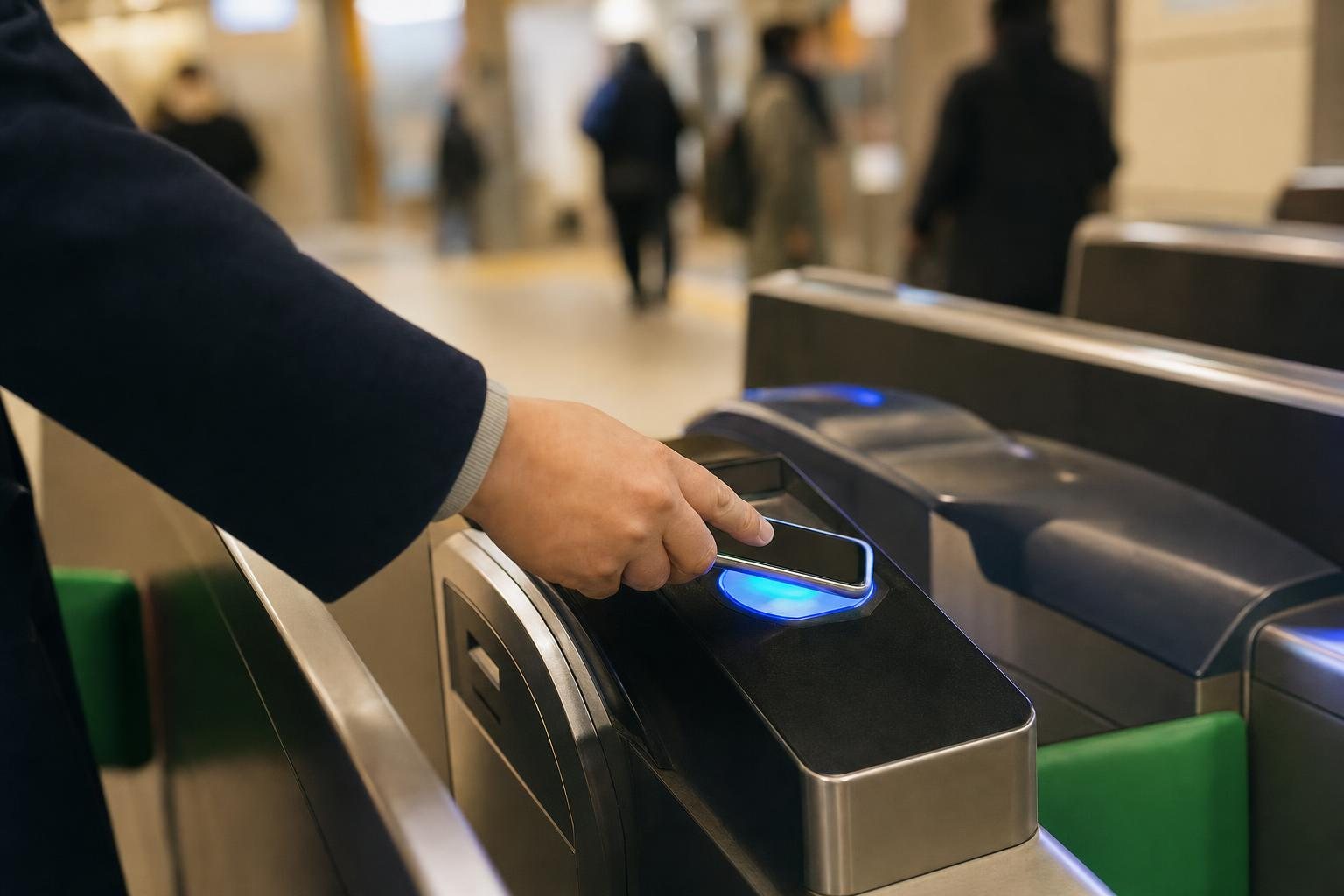
    Any iPhone 8 or newer can hold a Suica in Apple Wallet — no Japanese phone, no deposit, balance never expires. Add card, top up, tap through the gate with your phone (or Apple Watch). For most travelers this is strictly better than plastic: you can’t lose it, and you top up from the sofa.

    One dependency: adding and topping up Mobile Suica needs a data connection at the moment you do it, so sort your eSIM first and set the card up while you’re still at the gate.

    The one catch is Visa. Foreign-issued Visa cards still fail Apple Wallet top-ups often enough in 2026 that you shouldn’t rely on them. Two clean workarounds:

    • Welcome Suica Mobile app (JR East’s official tourist app, iPhone-only): in-app top-ups succeed with more cards, valid 180 days, and it can even book Shinkansen/Narita Express seats. This is the route for Visa-only travelers
    • Cash top-up: even a mobile Suica can be topped up with cash at 7-Eleven ATMs and convenience stores — the universal fallback

    If you have an Android bought outside Japan: it’s plastic, and that’s fine

    Here’s the blunt truth most sites bury: Google Wallet Suica does not work on phones sold outside Japan — they lack the FeliCa secure element, and no app or setting fixes that. Don’t waste an evening trying. Get a physical card:

    Card Deposit Valid Where Good to know
    Welcome Suica None 28 days Narita/Haneda machines, JR East Travel Service Centers Cash top-up only. No refunds — spend it down
    TOURIST PASMO (new, May 2026) None 28 days Haneda (Keikyu) & Narita (Keisei) counters/machines Can be purchased by credit card — the only one
    Regular Suica/Pasmo ¥500 No expiry Any station machine (sales resumed Mar 2025) Refundable at JR East stations (¥220 fee) — best for 28+ day stays and repeaters

    “Can’t I just tap my credit card like in London?”

    Almost — and 2026 made real progress. Since March, 729 stations across Tokyo’s subways and private railways accept contactless credit cards at the gate (Visa, Mastercard, Amex, JCB). But the big asterisk: JR East never joined. The Yamanote line, Chuo line, the trains you’ll ride most — no card tap. Same story in Kansai: private rail yes, JR no.

    So the honest 2026 status: tap-to-ride is a useful backup, not a replacement. You still want a Suica-family card in your pocket or phone.

    Everything else worth knowing

    • One card works everywhere: Suica bought in Tokyo works on Osaka/Kyoto trains, buses, konbini, vending machines — the 10 major IC cards are interoperable nationwide
    • Top-ups are cash-first: station machines and convenience stores. Physical tourist cards can’t be topped up by credit card
    • Refunds are a trap: Welcome Suica, TOURIST PASMO, and the mobile tourist app are all no-refund. The move: run your balance down at a konbini on the last day (it pays for snacks perfectly)
    • Kids under 12: get child versions of the physical tourist cards (passport needed) — mobile apps require 13+, and credit-card tap gates can’t charge child fares
    • Kansai-only trip? Just buy an ICOCA locally (¥500 deposit, refundable at JR West stations) — same interoperability, refund where you actually are

    FAQ

    Can I still buy a regular Suica in 2026?
    Yes. Unrestricted sales resumed March 1, 2025 after the chip-shortage suspension. Any guide saying otherwise is outdated.

    Why won’t my Visa top up Suica in Apple Wallet?
    A long-running issue with foreign-issued Visa cards. Use the Welcome Suica Mobile app (in-app top-ups behave better) or cash. It’s not your phone’s fault.

    Does a Tokyo-bought card work in Osaka and Kyoto?
    Yes, everywhere — trains, buses, shops. Just don’t ride a single journey across IC regions; buy a paper ticket for that leg.

    Can I get my leftover balance back?
    Only on regular (non-tourist) cards, at the operator’s own stations. Tourist cards: no refunds by design — spend it down.

    How much should I load?
    Start with ¥3,000–5,000. Tokyo train rides run ¥150–300; a heavy sightseeing day burns about ¥1,000–1,500 on transport.

    The bottom line

    iPhone: Suica in Apple Wallet (Mastercard/Amex) or the Welcome Suica Mobile app (Visa). Android from abroad: TOURIST PASMO if you want to pay by card at the airport counter, Welcome Suica otherwise, regular Suica if you’ll stay 28+ days or come back. And your contactless credit card? A nice-to-have for the subway — never the whole answer.


    Verified against JR East, PASMO and operator sources, August 2026. This landscape changes fast (it changed twice this year already) — spot something outdated? Tell us.
  • Where to Stay in Tokyo (2026): Pick Your Base in Five Questions

    Where to Stay in Tokyo (2026): Pick Your Base in Five Questions

    Some links on this site may become affiliate links once our partner applications are approved. Recommendations don’t change either way.

    The short answer: stay on the Yamanote loop line, and for a first trip, make it Shinjuku or the Tokyo Station side. Everything else is trade-offs — and that’s what this page settles.

    Tokyo doesn’t have one “downtown.” It has a ring of them, connected by the JR Yamanote line, and picking your base is genuinely the highest-stakes decision of your trip: it decides how tired you are at 9pm every single night. I live here; here’s how I’d actually choose.

    The one rule before anything else

    Stay on (or one stop from) the Yamanote line. A hotel ¥3,000 cheaper but two transfers away quietly costs you 40 minutes and a train squeeze every day. In 2026, with Tokyo hotel rates at record highs (mid-range now averages roughly ¥25,000 a night, basic business hotels ¥12,000–18,000), the temptation to drift off-loop is real — resist it, or drift smart (more below).

    The Yamanote Loop, simplified stay on the ring — pick your side Shinjukueverything, loud Shibuyayoung, hills ShinagawaHaneda + Shinkansen Tokyo St.day trips, calm Uenobudget, Narita Ikebukuro value Asakusa old Tokyo, off-loop nightlife & energy access & order value
    Rough positions, honest trade-offs. Full table below.

    The comparison table

    Area Vibe Price Best for Skip it if…
    Shinjuku Everything, all at once ¥¥¥ First-timers, nightlife + day trips (direct trains to Hakone/Kawaguchiko) …you’re a light sleeper who hates crowds. The station is a boss battle
    Tokyo Station / Ginza Polished, calm at night ¥¥¥¥ Shinkansen day trips, Disney, families who value order …you want the neon. It goes quiet after 9pm
    Shibuya Young, loud, iconic ¥¥¥¥ Nightlife, shopping, first-Instagram-then-sleep energy …you have big suitcases. The hills and crowds punish luggage
    Asakusa / Ueno Old Tokyo, temples, markets ¥¥ Budget travelers, atmosphere, direct Skytree/Narita access …nightlife matters. Dinner options thin out early
    Ikebukuro Big, unfashionable, underrated ¥¥ Value hunters who still want the Yamanote line …you’re chasing “beautiful Tokyo.” It’s practical, not pretty
    Shinagawa / Hamamatsucho Business-hotel land ¥¥ Early Shinkansen, Haneda flights — the Local Test winner below …you want to walk out into excitement

    The Local Test: where Japanese travelers actually stay

    Here’s something the guidebooks won’t tell you: Japanese business travelers — the most price-and-efficiency-obsessed hotel bookers on earth — cluster in Shinagawa, Hamamatsucho, and Ikebukuro. Not because they’re glamorous, but because the access-per-yen is unbeatable: Yamanote line, airport links (Haneda via Keikyu/monorail), Shinkansen stops, and business hotels (Dormy Inn, Super Hotel, Tokyu Stay) that are clean, quiet, and ¥8,000–10,000 cheaper than the same room in Shibuya.

    If your trip is “out exploring all day, hotel is for sleeping” — copy them. Nobody regrets a Dormy Inn with a rooftop bath.

    Decide in five questions

    1. First time in Japan, one week, want it all? → Shinjuku. Endure the station; enjoy everything else
    2. Day trips to Kyoto/Nikko/Disney on the menu? → Tokyo Station side. Rolling out of bed onto a Shinkansen is a luxury worth paying for
    3. Budget under ¥15,000/night without leaving civilization? → Ueno or Ikebukuro
    4. Traveling with kids or big luggage? → Tokyo Station/Ginza or Shinagawa. Flat sidewalks, elevators, order
    5. Here for the night city? → Shibuya or Shinjuku’s east side, and accept the price

    Common mistakes

    Booking Asakusa for a nightlife trip. It’s wonderful — and mostly asleep by 21:00. Match the area to your evenings, not your daytime photos.

    Treating “near a station” as binary. “Near Shinjuku station” can still mean a 15-minute indoor labyrinth. Check the walk from the exit, not the station pin.

    Saving ¥2,000 by going off-loop. You’ll repay it in time, transfers, and 22:00 exhaustion. If you must save, save smart: Ikebukuro and Ueno are the sanctioned shortcuts.

    Ignoring Haneda vs Narita. Landing at Haneda? Shinagawa-side makes arrival day painless. Narita? Asakusa/Ueno (Keisei line) wins. Book the airport before the aesthetic.

    The bottom line

    Shinjuku if you want everything, Tokyo Station if you’re day-tripping, Ueno/Ikebukuro if you’re saving, Shinagawa if you’re flying or riding early — and always, always on the loop. Prices in 2026 are the highest Tokyo has ever charged; the way to win isn’t finding a mythical cheap gem, it’s refusing to pay for a location that doesn’t match how you’ll actually spend your evenings.

    Once the area is settled: the fastest way in from your airport, and which day trip fits the neighbourhood you chose.


    Price levels reflect Tokyo’s record-high 2026 rates (city ADR around ¥22,000; mid-range ~¥25,000) and will vary by season — cherry blossom and autumn weeks run far higher. Corrections welcome via the contact page.

  • Is the JR Pass Worth It in 2026? The Break-Even Math, Done For You

    Is the JR Pass Worth It in 2026? The Break-Even Math, Done For You

    Some links on this site may become affiliate links once our partner applications are approved. Recommendations don’t change either way.

    The short answer: for the classic Tokyo–Kyoto–Osaka trip, no. Since the 2023 price hike (a 69% jump that most old blog posts still haven’t caught up with), the nationwide Japan Rail Pass only pays off on long, multi-city itineraries — and for most real-world trips, a regional pass does the same job for half the price.

    I live in Japan, and this is the question visiting friends ask me most. So here’s the actual math, done honestly — including the cases where the pass does win.

    What the JR Pass costs now (as of Aug 2026)

    Duration Ordinary approx USD Green (1st class)
    7 days ¥50,000 ~$333 ¥70,000
    14 days ¥80,000 ~$533 ¥110,000
    21 days ¥100,000 ~$667 ¥140,000

    2026 heads-up: from October 1, 2026, passes bought through resellers (Klook, JRPass.com, travel agents) get a price bump — the 7-day goes to ¥53,000 — while the official site keeps current pricing. The official site also lets you reserve seats online before you land, and you can now pick up your pass at station ticket machines with just your passport. In 2026, buying anywhere other than the official site is hard to justify.

    The break-even math, three real itineraries

    Rule of thumb: you need to ride about ¥50,000 worth of trains in 7 days. Here’s what common trips actually cost with regular tickets (reserved seats, standard season):

    Check the current price first

    Prices and the regional alternatives change; Klook is an authorised seller and lists the nationwide pass and the regional ones on the same page, so you can compare before doing the maths below.

    Check JR Pass prices →

    Itinerary Regular tickets 7-day pass ¥50,000?
    A. Tokyo ⇄ Kyoto round trip ~¥28,000 No. You lose ~¥22,000
    B. Tokyo → Kyoto → Osaka → Hiroshima (one way) ~¥26,000 No. Half the pass goes unused
    C. Tokyo → Kyoto → Hiroshima → Tokyo loop + side trips ~¥45,000–51,000 Barely. Only with Nara/Miyajima/airport legs added

    That’s the uncomfortable truth: the itinerary 80% of first-timers actually take (scenario A or B) hasn’t justified the nationwide pass since 2023. Clear wins do exist — Tokyo→Kyoto→Fukuoka and back, or a 14-day nationwide loop — but they’re the exception, not the default.

    The Nozomi asterisk

    The pass doesn’t cover the fastest trains (Nozomi/Mizuho) — you either take the slightly slower Hikari/Sakura (about 30 minutes more Tokyo→Kyoto, perfectly pleasant), or pay a surcharge: ¥4,960 one-way Tokyo→Kyoto, ¥8,140 Tokyo→Hakata. Factor this in before you count on “unlimited” bullet trains.

    What to do instead: the regional pass cheat sheet

    This is where the real value hides in 2026 — and where most outdated guides fail you (JR East completely reorganized its passes in March 2026; prices below are current):

    Pass Price / days Sweet spot
    JR West Sanyo-San’in ¥23,000 / 7d Osaka→Himeji→Hiroshima→Fukuoka. Includes Nozomi/Mizuho on the Sanyo line — something the ¥50,000 nationwide pass can’t even do
    JR West Kansai Wide ¥12,000 / 5d Kyoto/Osaka base + Himeji, Kinosaki, Okayama day trips
    JR EAST PASS (new, unified) ¥35,000 / 5d ・ ¥50,000 / 10d Tokyo→Sendai→Aomori loops. A Tokyo–Shin-Aomori round trip alone (~¥36,000) beats the price
    JR Tokyo Wide ¥16,000 / 3d Nikko, Karuizawa, Kawaguchiko day trips from Tokyo
    JR All Kyushu ¥26,000 / 7d Fukuoka→Nagasaki→Kumamoto→Kagoshima

    Two more money-savers nobody tells you about: smartEX early-bird fares (book Tokaido Shinkansen 21+ days ahead for real discounts) and domestic flights — for Tokyo→Sapporo or Tokyo→Fukuoka, budget airlines and the airlines’ special visitor fares are usually cheaper and faster than rail.

    If the maths says yes

    Buy before you fly. The pass is issued as an exchange voucher and swapped for the real thing at a JR office in Japan — Klook is an authorised seller and the same price as buying direct. Regional passes are on the same page if the nationwide one didn’t add up.

    Buy the JR Pass →

    Common mistakes (please don’t)

    “The pass covers all trains in Japan.” Subways, city buses, and private railways (much of Kyoto sightseeing!) are not included.

    “I’ll use it around Tokyo.” City-level use can never recover ¥50,000. That’s what a Suica card is for.

    “Resellers are cheaper.” Roughly equal today; from October 2026, the official site is clearly cheaper — and it’s the only channel with advance online seat reservations.

    “That blog said ¥29,650.” That was the pre-October-2023 price. If a guide quotes it, close the tab — everything else in it is stale too.

    “Buy first, plan later.” Backwards. Fix your itinerary first, price the individual legs (Google Maps shows fares), then see which pass — if any — fits.

    The bottom line

    Buy the nationwide JR Pass only if your route already adds up — long loops, multiple distant cities, 14+ days of genuine movement. For the Golden Route, buy individual tickets or smartEX fares. Going deep into one region? A regional pass at ¥12,000–35,000 almost always wins.

    The pass isn’t a rip-off. It’s a specialist tool that most travelers were sold as a default — and in 2026, the default answer has changed.


    Prices verified August 2026 against official JR sources; fares change (JR East revised fares in March 2026). Spot an error? Tell us via the contact page — corrections matter more to us than being first. Some links here are paid affiliate links.

  • Best eSIM for Japan (2026): I Compared 6 Options So You Don’t Have To

    Best eSIM for Japan (2026): I Compared 6 Options So You Don’t Have To

    This post contains affiliate links (once our partner applications are approved). As someone living in Japan, I only recommend what actually works here.

    Here’s the thing nobody tells you about buying an eSIM for Japan: almost every “unlimited” plan has a hidden daily speed cap, and the differences between providers have less to do with price than with which Japanese network they ride on.

    I live in Japan. I’ve watched visiting friends fight with APN settings at the airport more times than I can count. So I dug into the six major eSIM options travelers actually buy — the real prices, the real speed caps, the real networks — and put it all in one place.

    The short version

    • Best overall: Airalo (Moshi Moshi) — cheapest reliable data, great app
    • Best network coverage: Ubigi — runs on docomo, the network that still works in the mountains
    • Best true unlimited: Holafly — if you refuse to count gigabytes
    • Best for first-timers: Klook eSIM — lives inside the app you’ll book tours with anyway

    The comparison table (prices as of Aug 2026)

    Provider Popular plans Network “Unlimited” fine print Tethering
    Airalo 10GB/30d $18 ・ Unlimited 15d $48 SoftBank + KDDI FUP applies Yes
    Ubigi 10GB/30d $16.50 ・ Unlimited 7d $25 docomo + KDDI 25–60GB then 2Mbps Yes, uncapped
    Holafly Unlimited only: 7d $27.50 ・ 15d $50.50 KDDI / SoftBank Closest to truly unlimited Only 1GB/day
    Klook eSIM ~$2/day unlimited ・ 1–50GB options SoftBank 5G / docomo 10GB/day, then 128kbps Yes
    Saily 5GB/30d $10.99 ・ Unlimited 15d $48.99 KDDI (reported) 5GB/day, then 1Mbps Yes
    Nomad 10GB $17 ・ Unlimited 7d $25 SoftBank + KDDI 2GB/day, then 1Mbps Check plan

    Prices fluctuate with promotions and exchange rates — treat these as ballpark figures and check the current price before you buy.

    Our pick

    Airalo runs on SoftBank and KDDI, has the best app of the group, and a 10–20GB plan covers most two-week trips.

    See Airalo Japan plans →

    The “unlimited” trap, explained honestly

    Read that fine-print column again. Klook’s unlimited plan throttles you to 128kbps after 10GB in a day (fine — 10GB is a lot). Nomad throttles after just 2GB per day (not fine if you’re uploading video). Holafly is the closest to genuinely unlimited, but caps tethering at 1GB per day — a dealbreaker if you plan to work from your laptop.

    None of these are scams; they’re just details that live three clicks deep on the checkout page. Match the cap to how you actually use data:

    • Maps + LINE + photos + translation ≈ 1–1.5GB/day → any 10–20GB plan covers a 2-week trip
    • Instagram stories + YouTube on trains → get a daily-unlimited type (Klook/Holafly)
    • Working remotely with a laptop → Ubigi (uncapped tethering) or a pocket WiFi

    Which Japanese network should you care about?

    In central Tokyo and Osaka: honestly, none. All three networks are excellent in cities.

    But if your itinerary includes Hakone, the Japan Alps, rural onsen towns, or long Shinkansen stretches, the local wisdom is consistent: docomo has the deepest rural coverage. That’s Ubigi’s quiet advantage, and why it’s my pick for anyone going beyond the Golden Route.

    Things that go wrong (and how to not let them)

    1. Turn Data Roaming ON for the eSIM line. Japan eSIMs work as roaming connections — this is the #1 “my eSIM doesn’t work” cause
    2. Install before you fly, activate after you land. The QR install needs internet; airport WiFi + jetlag is a bad combo
    3. Check your phone is carrier-unlocked (Settings → General → About → “No SIM restrictions”). Phones on US carrier payment plans are the usual victims
    4. These are all data-only — no Japanese phone number. That’s fine for 90% of travelers (restaurants take web bookings, LINE/WhatsApp handle calls), but know it before you need it
    5. One QR = one install. Don’t delete the eSIM profile mid-trip

    What about pocket WiFi or a physical SIM?

    • Groups of 3+: a pocket WiFi router (Ninja WiFi, ~¥440/day + options, 15 devices) often beats buying 4 eSIMs
    • Long stays (1–3 months) or “I want English support in Japan”: Sakura Mobile costs 2–3× more than a travel eSIM but comes with local English-language support
    • Everyone else: an eSIM wins on price and convenience. No counters, no return envelopes

    FAQ

    Do I need a Japanese phone number?
    Almost certainly not. Data-only is enough for maps, messaging apps, and web reservations. The rare exceptions: some phone-only restaurant reservations and delivery redelivery calls.

    How much data for a 2-week trip?
    10–20GB covers most people comfortably. Heavy social media users should pick a daily-unlimited plan instead of doing math.

    docomo, au, or SoftBank — which is best?
    Cities: no practical difference. Countryside and mountains: docomo, which means Ubigi.

    Why isn’t my eSIM working?
    In order: Data Roaming ON → correct line selected for data → APN set per your provider’s email → restart. That sequence fixes nearly everything.

    Can I tether my laptop?
    Airalo, Ubigi, Klook, Saily: yes. Holafly: only 1GB/day. If tethering is your lifeline, choose Ubigi.

    The bottom line

    For most trips: Airalo’s 10–20GB plan is the safe, cheap default. Going rural: Ubigi. Refusing to think about data at all: Holafly, as long as you don’t tether. Booking everything through Klook anyway: their eSIM keeps it all in one app.

    Whatever you pick, install it the night before your flight — future-you at baggage claim will be grateful.

    Sort it before you fly

    Install now, activate when you land. Takes about five minutes.

    Get a Japan eSIM →


    Prices and plan details checked in August 2026 and will change. This site is not affiliated with any carrier. Corrections welcome via the contact page. Some links here are paid affiliate links.