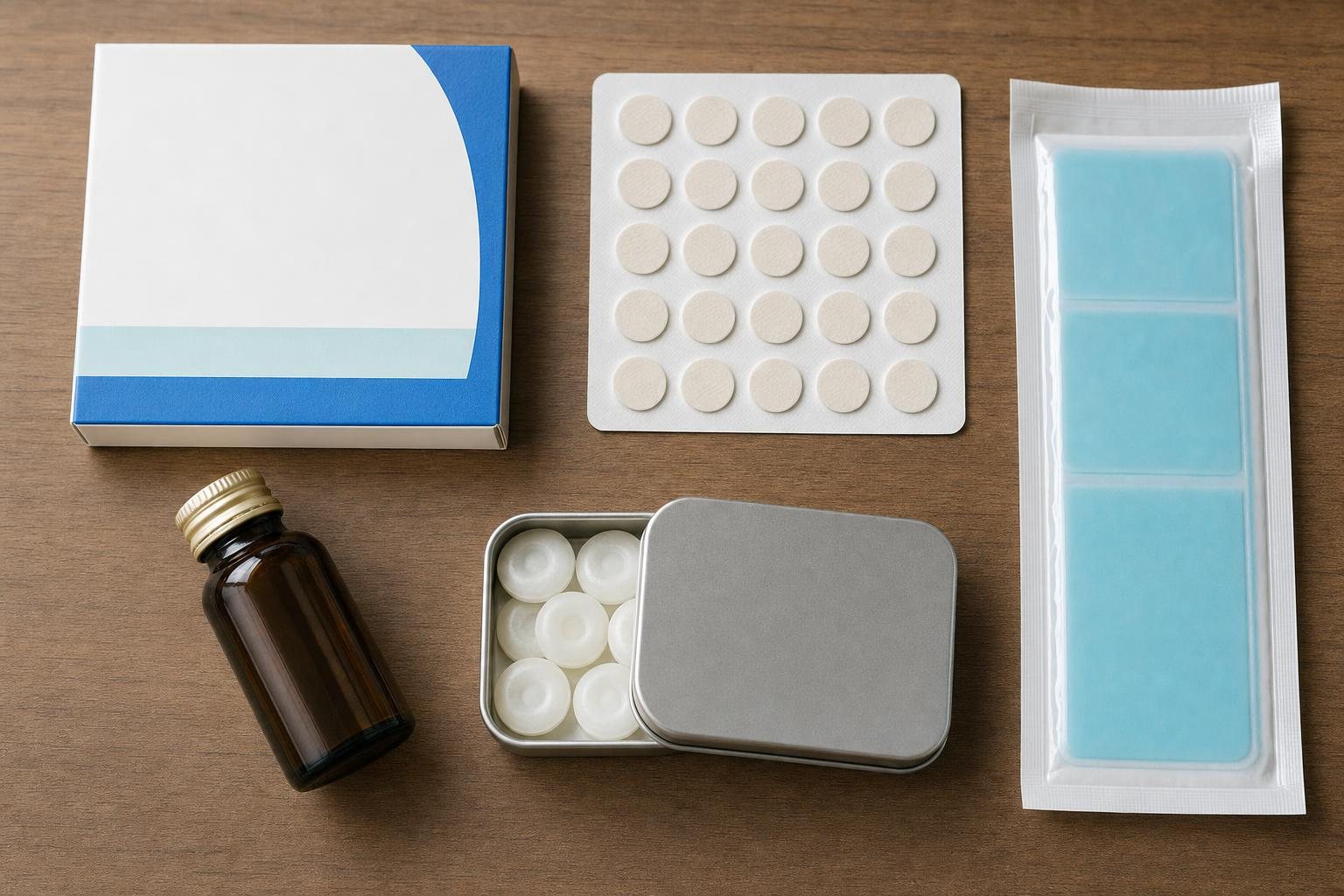
Japanese drugstores are full of small, cheap, very good remedies. They are also full of things that are illegal to carry into some countries. Both halves of this matter.
The call
Buy the topical stuff. Cooling forehead sheets, Salonpas and ROIHI-TSUBOKO patches, cooling leg sheets, throat lozenges. Cheap, effective, hard to find abroad, and legally uncomplicated.
Be careful with cough and cold medicine. Several common Japanese cold remedies contain dihydrocodeine, which is a controlled substance in the UAE, Singapore and elsewhere. This is the one genuine legal risk on a Japanese pharmacy run.
Buying a boxful?
Patches, lozenges and cooling sheets add up fast. The Don Quijote tourist coupon takes 5% off over ¥10,000, 7% over ¥30,000, stacked on tax-free — worth having in your phone before you start.
And don’t bring your own stimulants in. Pseudoephedrine and Adderall are prohibited under Japan’s Stimulants Control Act, with no simple import route.
What’s worth buying
Cooling forehead sheets (Netsusama Sheet)
Kobayashi Pharmaceutical. About ¥470–650 for 16 adult sheets. Gel patches you stick on your forehead for fever or a hangover; they stay cold for hours. Every Japanese household has a box and most visitors have never seen them.
Salonpas and ROIHI-TSUBOKO patches
Salonpas (Hisamitsu) is the famous one: ¥555 for 40 sheets, ¥821 for 80. ROIHI-TSUBOKO — the little round brown ones — is made by Nichiban, not Hisamitsu as half the internet claims. Around ¥1,320 for 78 sheets at list, often much less. These are the single most-bought item by returning visitors, and the reason is that they work and the equivalent abroad costs several times more.
Cooling leg sheets (Kyusoku Jikan)
Lion. You stick them on your calves overnight after a day of walking 25,000 steps around Kyoto. Roughly ¥900 for a pack. Note some formats may be discontinued — check what’s on the shelf.
Ryukakusan throat lozenges
A herbal powder and lozenge line that’s been made since the Edo period. Expect roughly ¥350–500 for a bag. Good for the dry-aeroplane-throat problem.
Ohta’s Isan stomach powder
Made by Ohta Isan — an independent company, not Sato Pharmaceutical. About ¥657 for 75g, or tablets from ¥583. For the specific problem of having eaten too much. Note the original powder formulation was reworked around late 2025, so the box may look different from older recommendations.
Seirogan
Taiko Pharmaceutical, ¥1,100 for 100 pills. An anti-diarrhoeal that has been sold since 1902 and smells overwhelmingly of creosote. Perfectly legal to carry; just be aware your suitcase will smell of it if the bottle isn’t sealed.
Cabagin Kowa
A stomach remedy built around cabbage extract. ¥1,780–2,180 for 200–300 tablets. Popular with people who are drinking their way through Japan.
Motion sickness tablets
Travelmin (Eisai) comes in several versions including a less-drowsy formula and a children’s one, from about ¥600 for six. Worth having for winding mountain roads to Hakone or a rough boat to Miyajima.
Eye drops: a note of caution
Japanese eye drops, especially the strongly mentholated Rohto ones, are a famous souvenir. Two honest points.
First, the cooling sensation isn’t the treatment. Rohto’s own research materials acknowledge that higher menthol increases irritation, and describe developing technology specifically to reduce it. Japanese health media and clinicians make the same point: menthol doesn’t treat eye fatigue.
Second, over-the-counter drops contain more preservative than prescription ones, and using them many times a day over long periods carries a corneal-irritation risk. So: don’t exceed the stated frequency (usually five or six times a day), and don’t read “stings more” as “works better.”
The legal part. Please read it.
Taking Japanese cold medicine home
Several widely sold Japanese cough and cold products — including items in the Benza Block and Pabron ranges — contain dihydrocodeine phosphate. In Japan this is ordinary over-the-counter stock. Elsewhere it is not:
- Singapore — dihydrocodeine is a Class B controlled drug. Unlicensed import can bring fines up to S$10,000 and up to two years’ imprisonment
- UAE — codeine-type drugs are Schedule 2 and require a permit from the health ministry plus the original prescription. Undeclared possession is treated as unauthorised possession of a controlled drug, with imprisonment and substantial fines
- Greece — codeine is handled strictly; bringing it in generally requires prior authorisation or a Schengen certificate for controlled medicines
The rule to follow: check your destination’s own health ministry or customs page — not a travel blog — before carrying any Japanese cough or cold remedy home. Keep it in the original box, and declare it if in doubt. A ¥900 box of cold tablets is not worth a customs problem.
Bringing your own medication into Japan
The mirror image, and it catches more people. Pseudoephedrine and amphetamine-based medicines such as Adderall are prohibited under Japan’s Stimulants Control Act. That includes the original formulation of some common Western decongestants. There is no easy exemption.
For prescription medicines generally — and for anything narcotic or psychotropic — you may need a Yakkan Shoumei (import certificate) from the Ministry of Health, arranged in advance. If you take regular medication, look this up before you fly, not at the airport.
The pharmacist counter
Some Japanese medicines are classed as yō-shidō iyakuhin — requiring guidance — and can only be sold face to face by a licensed pharmacist, not by the ordinary registered seller who staffs most drugstore aisles. These are typically newly switched prescription-to-OTC products.
Practically: if a product is behind the counter and someone in a white coat wants to talk to you about it, that’s the system working, and the conversation is worth having. Rules here were being reformed through 2025–26, so what’s available online versus in person is in flux.
What tourists get wrong
- Assuming Western dosing. Japanese OTC doses are often calibrated to a lower average body weight. Don’t double up on your own initiative — ask the pharmacist
- Buying supplements thinking they’re medicine. The shelves sit side by side and the packaging looks similar
- Not being able to read the label. Use your phone’s camera translation on the box before you buy, not after. Osaka Prefecture publishes an official multilingual pharmacy-counter manual precisely because this is a recognised problem
- Treating strong sensation as strong medicine. See eye drops, above
FAQ
What’s the one thing to buy?
ROIHI-TSUBOKO. Small, light, cheap, and people ask you to bring more next time.
Is any of this cheaper at Donki?
Not reliably — compare. Donki guide here.
Can I claim tax-free on medicine?
Yes, medicines count as consumables. Until 31 October 2026 that means a sealed bag you mustn’t open; after 1 November the sealed-bag rule goes and you claim the tax back at the airport instead. Details.
Where do I find an English-speaking pharmacist?
Larger Matsumoto Kiyoshi and Welcia branches in tourist districts. Failing that, translate the box and point.
The bottom line
Load up on patches, cooling sheets and lozenges — they’re the best-value souvenirs in Japan and nobody regrets them. Read the ingredients on anything for coughs and colds, and check your own country’s rules before it goes in the suitcase.
See also: the wider drugstore shortlist and skincare worth buying.
One last thing
Patches and lozenges are the souvenirs people ask you to bring next time. If you are buying in bulk, the Don Quijote coupon stacks on top of tax-free.
Prices are typical retail as of September 2026, not manufacturer list, and vary by shop. This is general information, not medical or legal advice — verify drug rules with your destination country’s own authorities and speak to a pharmacist about anything you intend to take. Corrections via the contact page. Some links here are paid affiliate links.
Leave a Reply