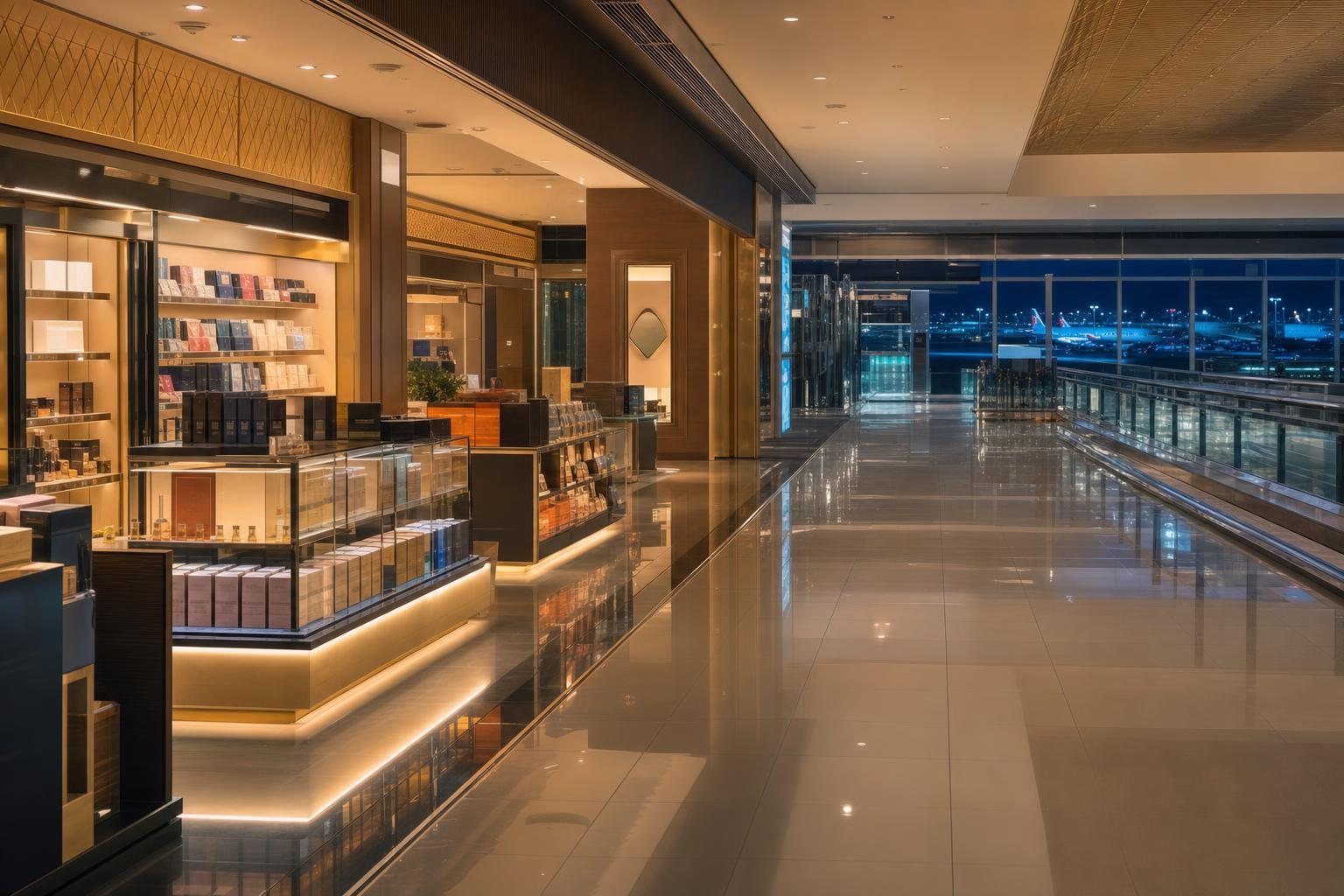
You have two hours at Narita or Haneda and a nagging feeling you forgot something. Here’s what’s actually worth buying airside, what you’re overpaying for, and the rule that ruins people’s last hour.
The call
Buy alcohol, tobacco and premium fragrance airside. Duty-free genuinely excludes both consumption tax and customs duty on these, so the saving is real.
Don’t buy electronics or general souvenirs airside. Bic Camera and Yodobashi in town are cheaper on the former; the latter are marked up.
Don’t leave your tax-free paperwork to the airport if you’re departing on or after 1 November 2026. From that date the refund step happens before bag drop, and missing it means losing the money.
Duty-free and tax-free are not the same thing
This confuses almost everyone, and the distinction matters because the two systems behave differently.
| Airside duty-free | In-town tax-free | |
|---|---|---|
| What’s excluded | Consumption tax and customs/liquor/tobacco duty | Consumption tax only |
| Where | After security and immigration | Shops in the city |
| Minimum spend | None | ¥5,000 before tax |
| Paperwork | Passport and boarding pass at the till. Done | Passport at purchase, plus an airport step from Nov 2026 |
The practical upshot: the 1 November 2026 tax-free reform does not affect airside duty-free at all. Duty-free shopping works exactly as it always has. It’s your in-town purchases that now need attention at the airport.
The step you cannot skip (from 1 November 2026)
If you bought anything tax-free in town on or after 1 November 2026, you paid the full price and the tax comes back to you only after customs verifies the goods left with you. That happens at a tax-free procedure terminal in the departure lobby — before you check your bags in.
Once the suitcase is on the belt, you can’t produce it for inspection, and the refund is gone. Terminal first, then check-in. At Narita, Haneda and five other major airports you can do the first part through Visit Japan Web in the designated Wi-Fi zones instead of queueing at a kiosk. Full walkthrough: what changes on 1 November.
Where the shops are
Narita
Terminal 1 has Narita Nakamise in the South Wing — the airport’s own description is Japan’s largest airport duty-free and brand mall — strongest on traditional goods: lacquerware, crafts, kimono-print items. Landside gift shops (open roughly 7:00–21:00) are accessible before security, which matters if someone is seeing you off. Airside there are Japan Duty Free outlets in both the North and South wings plus an ANA duty-free shop. The 5th floor has an observation deck with shopping attached.
Terminal 2 splits duty-free by category — separate cosmetics/perfume, liquor/tobacco and general outlets, plus JAL Duty Free. Note that some duty-free shops at Narita are arrivals-only, for people landing; easy to walk into by mistake when departing.
Hours run roughly 6:30/7:00 to 21:00/22:00. Narita is not a 24-hour shopping airport — a very early or overnight departure may find things shut.
Haneda
Terminal 3 (international) is the better airport for this. Edo Koji on the 4th floor is a recreated Edo-period streetscape with two food alleys, and it’s genuinely pleasant rather than merely a shopping concourse. The 5th floor has Tokyo Pop Town for anime and character goods, a 24-hour observation deck, and a Don Quijote nearby for the things you forgot.
Haneda T3 also has real 24-hour options — a 24h Air LAWSON on 1F, a Seven-Eleven airside, and a handful of restaurants including an Edo Koji ramen shop. Most retail keeps normal hours, so check the per-store listing, but if your flight is at 6am Haneda is far kinder than Narita.
Terminal 2 is primarily domestic, with maker counters (Tokyo Banana, Royce’, regional specialities) and a 5F observation-deck shopping area.
What’s worth buying airside
- Alcohol — the duty exclusion is real. Japanese whisky, sake, umeshu. Note the checked-baggage limit below
- Tobacco — same logic
- Premium fragrance and prestige cosmetics — competitive, and no ¥5,000 minimum to worry about
- Crafts and traditional goods at Narita Nakamise — a genuinely good selection you won’t have seen in a convenience store
- The thing you forgot. Convenience has a value and it’s fine to pay it once
What’s overpriced airside
- Electronics. Bic Camera and Yodobashi in town, with their own tax-free desks, are the answer
- Snacks and standard souvenirs. A supermarket, a station depachika, or Donki with the coupon all beat the airport
- Drugstore items. Buy these in a drugstore. Shortlist here
The liquid rules, which is where people lose things
No single container over 100ml in your carry-on, all of them fitting in one one-litre resealable bag. This applies to international departures from Japan and it is enforced.
So: that 500ml bottle of hatomugi lotion, the 230ml cleansing oil, the sake you bought in Kyoto — checked baggage. If you’ve already checked in and it’s in your hand luggage, you will be surrendering it.
The exception: liquids bought airside, after security, can exceed 100ml. They’re sealed in a tamper-evident bag with the receipt. Keep the seal intact — if you’re connecting through another country and the seal is broken, or that airport doesn’t recognise the bag, you can lose it at the second checkpoint.
Alcohol in checked baggage: up to 5 litres per person for anything between 24% and 70% ABV, in unopened retail packaging. Under 24% isn’t limited by this rule. Over 70% cannot fly at all. Airlines can be stricter, so check yours.
How much time do you actually need
No airport publishes a “leave this long for shopping” figure. The workable version: three hours before an international flight as the baseline, and if you have in-town tax-free receipts to process from November 2026, add an hour. The tax-free terminal is new, nobody has done it before, and the queues in the first months will be the worst they’ll ever be.
Most of the interesting shops are airside, so the sequence is: tax-free terminal → check bags → security and immigration → shop.
FAQ
Can I claim the in-town tax refund on something I bought at the airport?
No. Airside purchases are already duty-free at the till — there’s nothing to refund. The two systems are separate.
Is Haneda or Narita better for last-minute shopping?
Haneda T3, comfortably. Better hours, better atmosphere, some 24-hour options.
I have a 6am flight from Narita.
Assume the shops are shut. Buy what you need the day before.
Where do I put my suitcase while I shop in town on my last day?
Here are the options — though if you’re flying out, checking in early and shopping bag-free is the cheapest version.
The bottom line
Alcohol and fragrance airside, everything else in town. Liquids over 100ml in the hold. And if you’re departing on or after 1 November 2026 with tax-free receipts in your pocket, do the refund terminal before you hand over your suitcase.
Shop hours and terminal details as of September 2026 and subject to change; confirm on the airport’s own site before relying on them. Corrections via the contact page.
Leave a Reply