On 1 November 2026, Japan stops taking the tax off at the till and starts refunding it after you leave. If your trip straddles that date, this changes what you pack, what you can open, and how early you need to be at the airport.
The call
Travelling before 1 November 2026? Nothing changes. Show your passport, pay the lower price, keep the sealed bag sealed.
Travelling after? You’ll pay the full price including 10% tax, then get that 10% back after a customs check at the airport. Budget for the cash-flow gap, and add half an hour to your departure plan.
The genuinely good news, which is getting lost in the coverage: the new system abolishes the sealed-bag rule and the ¥500,000 daily cap on consumables. You’ll finally be able to buy skincare in Ginza and actually use it in your hotel that night. For most tourists that’s a real improvement, paid for with one extra queue.
How it works now (until 31 October 2026)
You show your passport, the shop deducts the consumption tax, and you walk out having paid the tax-free price. Two categories, two sets of rules:
- General goods — clothes, electronics, bags. Use them freely in Japan.
- Consumables — cosmetics, medicine, food, drink. Sealed in a tamper-proof bag you must not open until you’ve left Japan, capped at ¥500,000 per person per day, and must leave the country within 30 days.
Minimum spend: ¥5,000 before tax, per shop, per day.
How it works from 1 November 2026
You show your passport, and you pay the full price, tax included. The refund comes later, and only after customs confirms the goods actually left with you.
What changes:
| Rule | Now | From 1 Nov 2026 |
|---|---|---|
| When you save the 10% | At the till | After departure |
| Sealed bags for cosmetics/food | Required | Abolished |
| Consumables vs general goods | Two categories | Abolished — one rule |
| ¥500,000 daily cap | Yes | Abolished |
| Deadline to take goods out | 30 days (consumables) | 90 days |
| Minimum spend | ¥5,000 per shop/day | ¥5,000 — unchanged |
| Airport step | None | Required |
How you’ll be refunded depends on the shop: bank transfer, credit card refund, an e-money or QR app, or in some airport arrangements cash. There’s no single national method, so ask at the till how that shop refunds you — for a large purchase, this is worth knowing before you hand over the card.
The airport step, which you cannot skip
This is the part that will catch people out, because no one has ever had to do it before.
- Go to the tax-free procedure terminal in the international departure lobby — before you check your bags in. Once the suitcase is on the belt, you can’t get it back for inspection, and that’s the refund gone.
- Scan your passport. The system pulls up your purchases and gives you one of two answers.
- Green: done, no inspection, go and have a coffee.
Red: take the actual goods to the customs inspection area.
At Narita, Haneda, Kansai, Chubu, Fukuoka, New Chitose and Naha, you can do the first step through Visit Japan Web in the designated Wi-Fi zones of the departure lobby instead of queuing at a kiosk. Set that up in advance.
Three things worth burning into memory:
- Each receipt is checked as a unit. If one item from a receipt is missing or has been consumed, the whole receipt’s refund is refused.
- Do it at your final departure point from Japan. Domestic connection to an international flight? It happens at the international airport.
- Nobody holds your flight. Officials have said plainly that if you don’t finish in time, you lose the refund — and no one compensates a missed flight over it. Arrive early. In the first months, arrive very early.
If your trip crosses the date
There’s no overlap period: the old system runs to 23:59 on 31 October, and the new one starts at midnight.
What matters is when you bought, not when you fly. Buy on 28 October and depart on 3 November, and that purchase was handled under the old rules — you already got the discount, nothing further to do. Buy on 2 November, and it’s a refund.
Which means one genuinely useful piece of planning: if your trip spans the changeover, do your big shopping in October. You get the money immediately and skip the airport step entirely.
The other tax: customs duty when you get home
A lot of people reading this are planning a big purchase — a bag, a watch, a camera — because Japan’s prices plus the weak yen plus tax-free make it look irresistible. It often is. But the 10% you save here can be handed straight back at your own border, and the shop won’t warn you.
Every country sets a personal allowance: the value of goods you can bring in without paying import duty and local VAT/sales tax. Above it, you declare and pay. The published figures, as of 2026:
| Arriving in | Duty-free allowance | Notes |
|---|---|---|
| United States | US$800 per person | Families can combine allowances |
| EU (by air or sea) | €430 | Then VAT at your country’s rate, plus duty on some goods |
| United Kingdom | £390 | Above it, VAT at 20% on the full value, not just the excess |
| Australia | A$900 per adult | Families can pool |
| Canada | C$800 after 48 hours away | Shorter trips have lower limits |
| Singapore | S$500 after 48 hours away | GST at 9% above it |
These change and have exceptions. Check your own customs authority before relying on a number here.
The maths that matters: a ¥400,000 handbag is roughly US$2,700. Tax-free saves you about ¥36,000. If you then declare it in the US, duty on leather goods can run 8–10% of the full value — about the same amount you just saved. In the UK, 20% VAT on the whole price wipes the saving out several times over.
Three honest points:
- Not declaring is a gamble with real downside. Customs officers know what a Ginza shopping bag looks like, and penalties are a multiple of the duty owed.
- Wearing it doesn’t exempt it. A watch on your wrist bought last week is still a new import.
- Where the deal still works: mid-range purchases under your allowance, and countries with generous limits. A ¥100,000 haul of cosmetics, clothes and small electronics clears most allowances with room to spare. That’s where tax-free earns its reputation.
Why Japan is doing this
Because the old system was easy to abuse. Goods bought tax-free were meant to leave the country, but nothing verified that they did — so a resale trade grew up around it. One audit found nine ineligible buyers alone purchased ¥3.3 billion of tax-free goods in a single year, dodging around ¥340 million in tax; one individual’s purchases topped ¥1.3 billion.
Moving the check before the money closes the loophole. It’s also how most of the world already does it — anyone who has claimed VAT back at a European airport will find the new Japanese process familiar.
What this means for you, practically
- Carry more headroom on your card. Everything costs 10% more at the moment of purchase. On a ¥200,000 camera that’s ¥20,000 of float.
- The refund isn’t instant. Money moves after customs confirmation, on the shop or refund agent’s timeline.
- Watch the exchange rate and fees. Refunded to a foreign card, your 10% comes back in yen converted on a later date, possibly minus a handling fee. What you get back may not exactly match what you “saved.”
- Keep receipts and goods accessible until the airport step is done. Not in the checked bag.
- Some small shops may stop offering tax-free entirely. Retailers have to front the refund and handle the admin, and industry commentary expects some independents to walk away. Department stores and chains will be fine.
FAQ
Is the tax rate changing?
No. 10% standard, 8% on food and non-alcoholic drinks. Only the mechanism of getting it back changes.
Can I still buy cosmetics and use them in Japan?
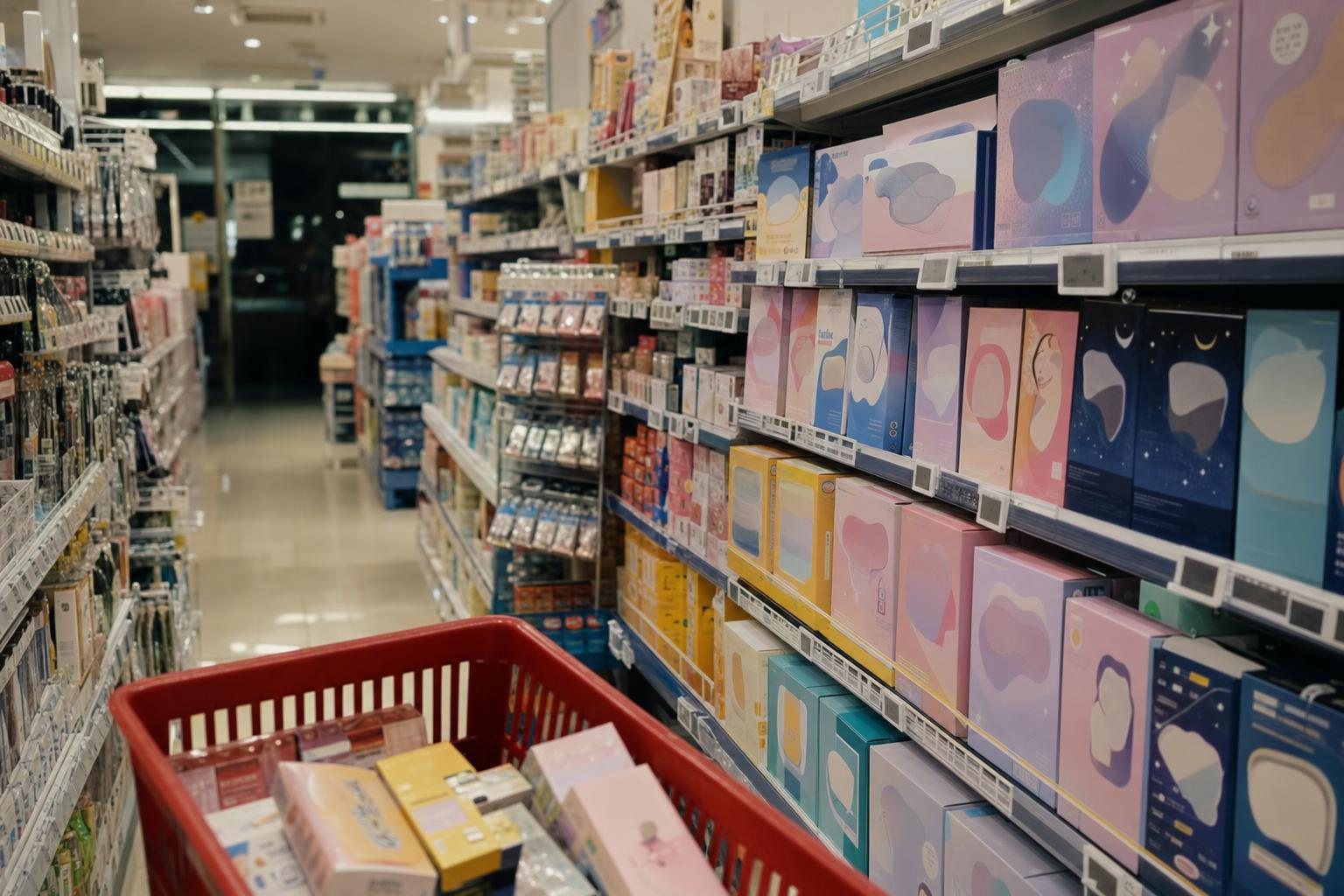
From 1 November, yes — and this is the biggest practical win of the reform. No more sealed bag, no more travelling with an unopened parcel of skincare.
What if I use something and then can’t claim?
Only that receipt is affected. Tell a customs officer rather than trying the kiosk and hoping.
Do the department store tax-free counters disappear?
No. They’ll continue, and any service fee they charge is their own, separate from the government refund.
Can I post things home and still claim?
No. Separate shipment was abolished back in March 2025. Goods leave with you, in your luggage.
How much time should I allow at the airport?
No official figure has been published. Treat the usual three-hour international check-in advice as a minimum, and if you’ve bought a lot, add an hour. The first few months will be the worst.
The bottom line
Same 10%, later. You trade an instant discount for one queue at the airport, and you get back the freedom to open what you bought — which, for most people spending an afternoon in a Tokyo drugstore, is the better deal.
Related: airport shopping and how duty-free differs, the Don Quijote coupon.
The single mistake to avoid: doing the tax-free step after you’ve checked your bags. Terminal first, then check-in. In that order.
Related: what’s actually worth buying in a Japanese drugstore.
Based on Japan Tourism Agency and National Tax Agency guidance as of August 2026. Operational details, particularly refund methods, are still being finalised by individual retailers — confirm at point of purchase. Corrections via the contact page.